


Opening a wholesale account is the fastest step in a sourcing relationship and the least examined. A buyer finds a factory, agrees a price, sends a purchase order. Three months later the same buyer is chasing a shipment that will not clear customs because nobody collected the compliance documents, or arguing about a defect rate that was never defined in writing.
Most of that is preventable in the first week. A supplier onboarding checklist does not slow the relationship down; it moves the hard questions to the point where both sides still want the business. This is the four-gate structure, in the order the account file should be built.
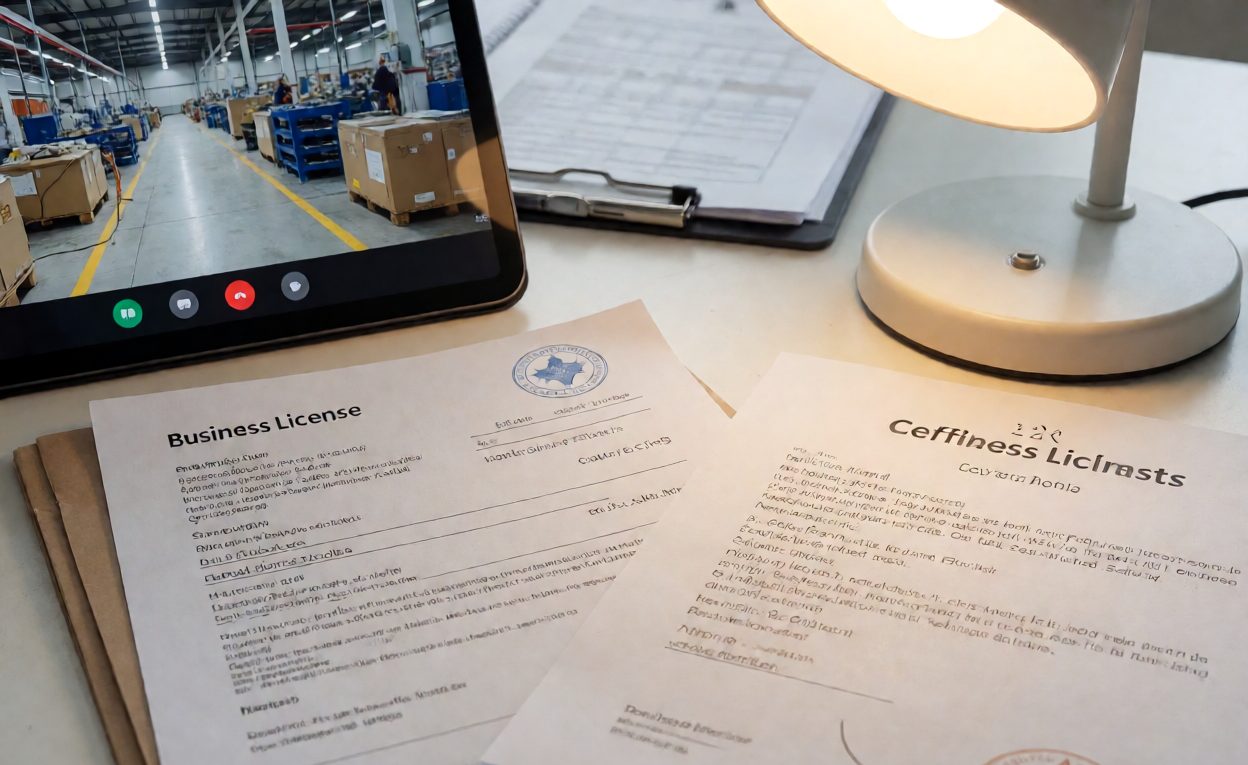
Gate One: Verify the Entity, Not Just the Product
Product samples prove what a factory can make. Entity checks prove who you are contracting with, which is the question that decides whether any of it is enforceable later.
- Legal name and business licence matching the name on the quotation, the invoice and the bank account. A mismatch usually means a trading company presenting itself as a manufacturer.
- Bank account in that same legal name. A request to pay a personal or unrelated account is a refusal criterion, not a point for negotiation.
- Production address with site evidence – a video walkthrough or dated photos of the line that would run your goods, not a sales office.
- Stated monthly capacity for your category and how much of it is already committed, which tells you whether your volumes fit at all.
Gate Two: Capability and Quality Evidence
Capability is documentation, not a claim. Ask for the records a factory already keeps, because a factory that keeps none will not start keeping them for your order.
- Related product history: three references in your category, or redacted shipment records where confidentiality applies.
- Equipment list and subcontracted operations. Outsourced processes are where quality escapes oversight, and they are rarely volunteered.
- Recent inspection records: in-process checks, final sampling results, and which defect categories actually appear.
- Certifications with valid dates plus test reports traceable to a named laboratory rather than a photocopy of one.

Gate Three: Commercial Terms Locked in Writing
Terms agreed verbally at onboarding are terms you renegotiate under pressure later. Four items belong in the account file before the first purchase order goes out:
- Price validity and its drivers: how long the quote holds and what triggers revision – material index, currency move, or volume band.
- Minimum order quantity per SKU and per colourway, plus the price breaks above it, so buys can be planned against real thresholds.
- Lead time counted from a trigger, not stated as a bare number: from deposit received or from sample approval, in working days.
- Payment structure and late-delivery remedy, including what happens when the confirmed ship date is missed.

Gate Four: The Compliance and Documentation Pack
This pack is what turns a shipment into an import. Collect it at onboarding rather than at booking, because missing papers hold containers while everyone argues about who was supposed to supply them. It should cover commercial invoice format, packing list structure, country of origin statements, the HS codes the factory declares, and test reports for each destination market’s product rules.
Technical Background
Onboarding is applied procurement practice: qualifying a source before awarding business, so the cost of selection is paid once rather than on every order. The document checks themselves are a form of due diligence, verifying claims about a counterparty against independent records before capital moves. What you build is a supplier file in the supply chain management sense, which is what makes later audits and re-qualification possible without starting from zero.
Keeping the File Useful After Onboarding
An account file nobody revisits is a folder. Re-qualify annually, and immediately after any event that changes the risk: a new legal name or bank detail, a move to another production site, or a quality failure that reached customers. Score suppliers on the same metrics each quarter so re-qualification is arithmetic rather than memory.
The entity checks here run alongside verifying a factory before your first order, and the audit mechanics are set out in remote versus onsite supplier audits. The commercial terms collected at Gate Three are explained in Incoterms on wholesale purchase orders, and the payment structure has its own detail in bulk order deposit and payment terms. Market paperwork is covered by product compliance and labelling for bulk importers, and ongoing performance tracking by supplier scorecard metrics.
Frequently Asked Questions
How long does supplier onboarding take?
One to two weeks for a cooperative factory. Most of the time is document collection rather than review, and long delays usually mean the paperwork does not exist.
What is the single most important onboarding check?
A bank account in the same legal name as the licence and invoice. It prevents the most common and least recoverable payment fraud in cross-border sourcing.
Should I onboard a trading company as a supplier?
Yes, if it is disclosed as one. Require the actual manufacturing site details so quality and compliance checks run against the real producer.
How often should suppliers be re-qualified?
Annually, and immediately after a change of legal name, bank details or production site, or after a quality failure that reached customers.
What deposit is normal on a first wholesale order?
Commonly 30 percent, with the balance before shipment or against documents. Newer relationships and custom tooling often start at 50 percent.
Do certifications have to exist before the first order?
For regulated categories, test reports must exist before production starts. For general goods, valid certificates before shipment is the minimum standard.
What belongs in a wholesale account file?
Entity documents, capability evidence, agreed commercial terms, the compliance pack, and a dated record of who approved the account internally.