


Every wholesale buyer eventually learns the same lesson: the cheapest stage to find a problem is a sample, and the most expensive is a container. Yet the sample stage is the one most often compressed, usually under time pressure. An order that “just needs to ship” this month becomes an order that ships with the wrong fabric weight, a finish that scratches in transit, or packaging that fails at a rate nobody budgeted for.
A written sample policy fixes this without slowing anything down. It defines which samples exist, what each one locks, who pays, and what must be approved in writing before mass production starts. This article sets out a policy structure that works for wholesale buyers and importers, whether products are catalogue items or custom developments.
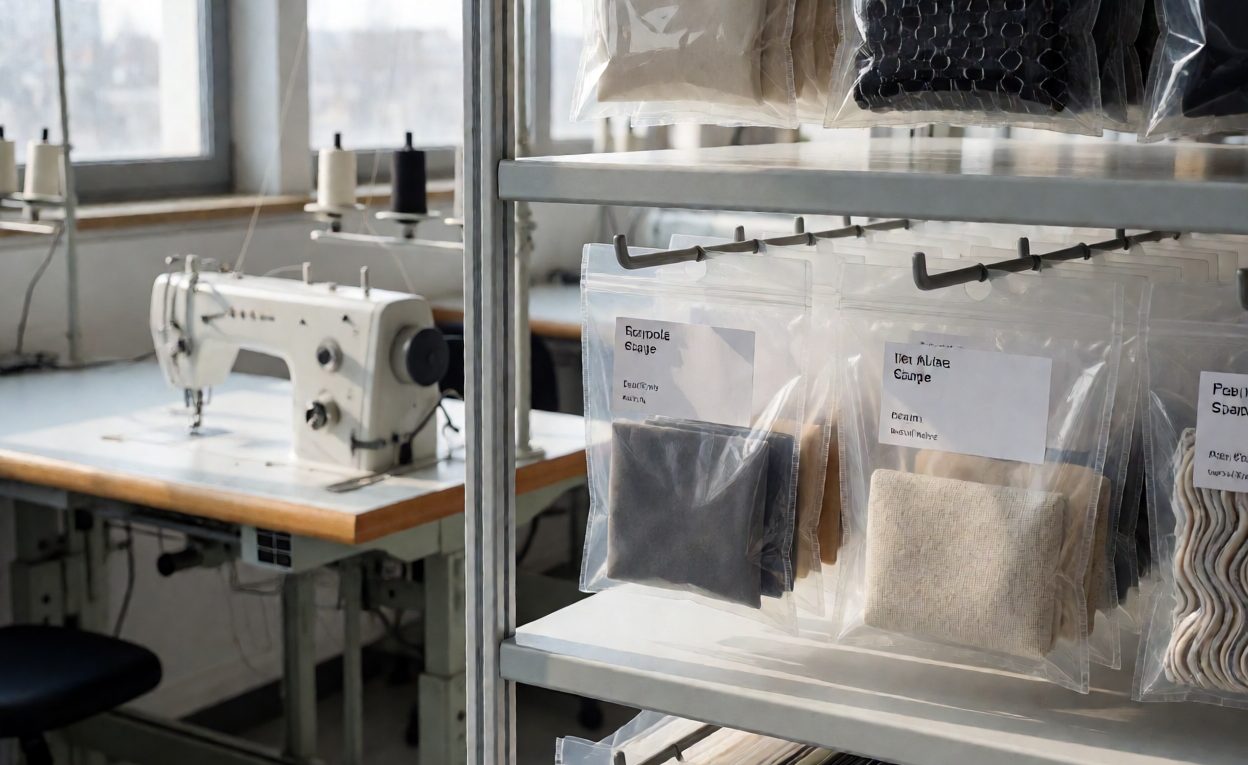
The Four Sample Stages
Not every order needs every stage, but every policy should name them so decisions are deliberate rather than accidental:
- Catalogue sample. A stock example of the product as the factory currently makes it. Its purpose is to judge baseline quality: materials, finishing, weight, and whether the factory’s normal output is acceptable at all.
- Custom sample. A first physical version of your modifications – your dimensions, materials, colours, packaging. Expect it to be wrong in one or two ways; its purpose is to surface those ways cheaply.
- Revised sample. The corrected version after feedback. Some products converge in one round, some take three. Each round should come with a written change list so the factory corrects exactly what you flagged.
- Golden sample. The approved reference that both parties keep. Once sealed and signed, it becomes the quality standard the production run is measured against.
The policy rule is simple: no purchase order for custom work is confirmed until a golden sample exists, and the golden sample is referenced by ID on the purchase order itself.
What a Golden Sample Locks – and What It Does Not
A golden sample is evidence, not a specification. It demonstrates the agreed quality of materials, colour, finish, assembly and dimensions as a physical reference both sides hold. It does not replace a written specification sheet, because samples do not survive disputes: a colour shift within a tolerance may be acceptable, a 2 mm dimensional difference may not, and “same as the sample” cannot arbitrate either.
Pair the golden sample with a specification sheet that states, in numbers: dimensions and tolerances, material composition, colour references, weight, packaging dimensions and materials, and labelling artwork versions. The specification governs measurement; the sample governs judgement. When the two conflict, the specification wins – which is exactly why the specification should be finalised before the golden sample is sealed.

Pre-Production Samples: The Last Gate
A pre-production sample, usually shortened to PP sample, is pulled from the actual production line using mass-production materials, tooling and processes, shortly before or at the very start of the run. It answers a different question from earlier samples: not “can this factory make it” but “is the line making it right, today, at speed”.
The differences that only a PP sample catches are real and recurring: a substituted material that looks similar but feels cheaper, a colour dyelot that drifted, a revised assembly jig that moved a seam, a packaging printer whose second run differs from the proof. Because PP samples come from production conditions, they are the last point at which a correction costs days rather than a full rework.
A sensible policy gate: mass production may not proceed past a defined completion point until the PP sample is approved in writing. For most wholesale orders this means the buyer approves within one or two working days of receipt, which is why the policy should name who approves and how silence is handled – a common term is that no reply within three working days counts as approval, keeping the factory’s line running and the delivery date intact.
Paying for Samples: Terms That Avoid Arguments
Sample charges are normal and reasonable; ambiguity about them is not. Standard market practice looks like this:
- Catalogue samples are often free with the buyer paying courier, or charged a nominal fee credited against the first order.
- Custom and revised samples are charged at cost or a multiple of it, because tooling, setup and small-batch inefficiency make a one-off genuinely expensive to produce. Charges per round are also an incentive to write complete feedback rather than drip-feed it.
- PP samples are usually free or near-free, since they come off the production run itself.
- Tooling and moulds are a separate line entirely, with agreed ownership: if you paid for the mould, you own it, and it should be recoverable if you ever move production.
Put all of it in the quotation or the purchase order terms. The specific number matters less than the fact that both parties agreed before money moved.

Technical Background
The sample process is an application of prototyping to consumer goods: build a cheap, fast approximation of the decision before committing to it. The industrial reason early corrections are cheap and late ones expensive sits in the economics of manufacturing, where rework and tooling costs scale sharply with volume. Writing requirements down before building draws on technical specification practice, which is precisely what a spec sheet plus golden sample combination implements.
Writing the Policy Down
One page is enough. Cover: the sample stages and who approves each; the rule that custom orders require a sealed golden sample referenced on the purchase order; the PP sample approval gate with its silence-is-approval window; sample fee terms; and where samples and specifications are stored. Attach the current spec sheet template so nobody invents a new format per supplier.
Then connect it to the rest of the sourcing workflow. Sample decisions sit downstream of verifying a factory before the first order, because a perfect sample from the wrong factory is a well-made mistake. The golden sample feeds directly into pre-shipment inspection, where inspectors check the run against the reference you sealed. For statistical acceptance of the finished bulk lot, third-party inspection and AQL sampling defines the numbers. If the product carries your brand, the sample stage is also where private label agreement terms should be settled, so artwork and trademark use are agreed before anything is printed. And when the supplier itself is unproven, remote versus onsite supplier verification tells you how much weight the sample you are holding can carry.
One further clause deserves attention before signing: what happens to unsold packaging and tooling when the relationship ends. Buyers who invest in private label assets should know whether moulds and printed stock return to them, are destroyed, or can be used to supply competitors – and the answer should be written down rather than assumed. Intellectual property clauses in supply agreements are often generic; the specific question of branded packaging leftovers is where disputes actually start.
Frequently Asked Questions
How much should a custom sample cost?
Commonly 2 to 5 times the unit production price, plus courier. A one-off interrupts a production line, so the factory prices the disruption, not just the materials.
How many sample rounds are normal?
One to three rounds for simple products with written feedback. More than three usually means the change lists are incomplete or the factory is not reading them.
What is the difference between a golden sample and a PP sample?
The golden sample is the agreed quality reference sealed before production. The PP sample is pulled from the production line itself, confirming that mass-production conditions reproduce that reference.
Who keeps the golden sample?
Both parties. The buyer keeps one, the factory keeps one, and each is signed and dated. Inspections compare production against whichever reference the inspector can access.
Can samples be skipped on repeat orders?
For an identical repeat against an unchanged specification, a PP sample is usually enough. Any change to materials, colour, tooling or packaging reopens the sample stage.
What does silence-is-approval mean for PP samples?
A contract term under which the buyer’s failure to respond within a set window, often three working days, counts as approval so the factory can keep the line running to the confirmed ship date.
Should sample fees be credited against the first order?
Often, and it is worth asking. Many factories credit sample fees on the first bulk order as goodwill, while tooling and courier costs usually stay with the buyer.