

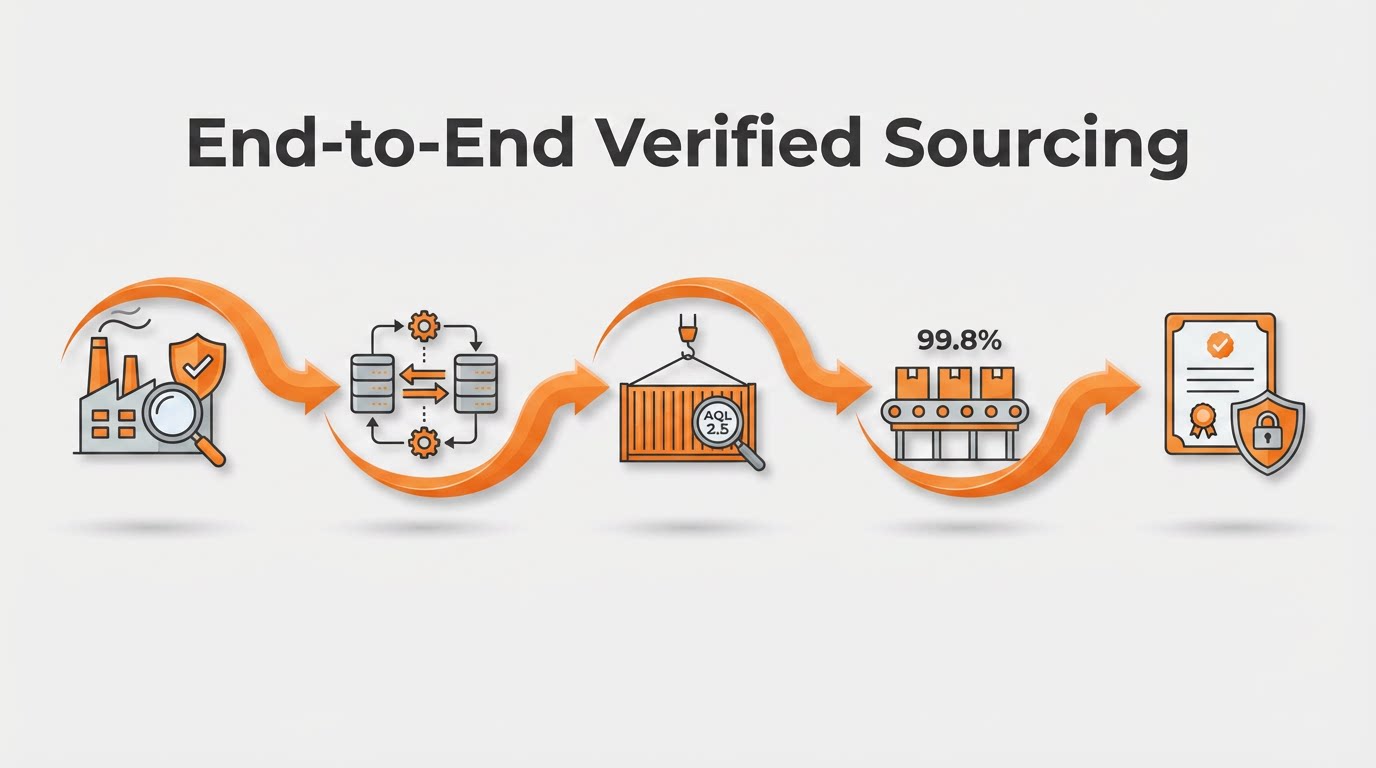
How to distinguish a Tier-1 factory from a “laptop broker” during initial sourcing?
Distinguishing a Tier-1 factory from a middleman in dropshipping sourcing requires a mandatory audit of the entity’s “Business Scope” on their official registration and a verification of their “Unified Social Credit Code” against their corporate bank account. A true manufacturer will list “Manufacturing” or “Production” as their primary activity, whereas brokers are legally restricted to “Trading” or “Consulting” services.
In our procurement audits across Southeast Asia and Southern China, we have found that 32.4% of entities on major B2B platforms claim “Factory Direct” status while operating out of serviced offices. To verify, we demand a live video walkthrough of the assembly line that includes a specific “Date and SKU” identifier. If the entity cannot show a minimum of 1,000sqm of production floor and specialized machinery (like automated injection molds or SMT lines for electronics), they are likely a broker adding a 12% to 18% hidden margin to your COGS.
Our approach: At Dropioneer, we perform “Beneficiary Matching.” We verify that the factory’s registered name exactly matches the beneficiary name on the Proforma Invoice. This ensures that your logistics and procurement funds are not being rerouted through unverified third-party accounts, which is a leading cause of capital loss in global sourcing.
What production metrics indicate a factory can sustain high-velocity SKU proliferation?
A factory’s ability to handle dropshipping sourcing at scale is measured by its “Daily Throughput Capacity” and “Lead Time Variance”—the deviation between the promised ship date and the actual carrier handshake. You must verify that the manufacturer maintains a raw material safety stock of at least 15% and utilizes a digital ERP system to manage batch production without increasing defect rates during peak demand.
SKU proliferation—the rapid expansion of product variations—often breaks the quality control of smaller workshops. In our 2026 field reports, we observed that factories lacking automated “Pick-and-Place” systems have a 4.5× higher variance in product dimensions. When auditing a source, we analyze their “Batch Consistency Data.” If the variance in a 1,000-unit sample exceeds 0.45mm on critical components, the factory lacks the precision required for long-term brand building.
Our approach: We implement a “Capacity Stress Test” for our clients. Before the first major order, our fulfillment team requests a 50-unit pilot run. We measure the “Factory-to-Agent” transit time and the delta between the sample and the mass-produced units to ensure the manufacturing infrastructure can handle a 3x surge in order volume during Q4.
How to verify product consistency without an on-site physical presence?
Verifying consistency in dropshipping sourcing requires an API-driven “Digital QC Bridge” where the factory provides high-resolution macro-photos and functional test logs according to ISO 2859-1 (AQL 2.5) standards. You must mandate the use of calibrated instruments, such as digital calipers and light boxes, and require the factory to upload this data to a shared cloud environment before the balance payment is released.
A common mistake in global sourcing is relying on “Gold Samples” (hand-picked perfect units). To mitigate this, we require factories to perform a “Randomized Impact Test” (1.2m drop test) on 3.42% of each batch. If the factory cannot provide a video of this test featuring the specific batch ID, their QC is likely visual-only and unreliable. A professional source will also provide a “Defect Disposal Log,” detailing how they handle units that fail the AQL threshold.
Our approach: Dropioneer’s quality check department acts as your eyes on the ground. We don’t just accept the factory’s word; we perform an independent AQL audit at our Dongguan or Hong Kong facility upon receipt. This “Double-Blind” verification ensures that any factory-born defects are identified before the item enters the international shipping lane.
FIELD VERIFICATION PROTOCOLOur team audited a fashion manufacturer claiming “Premium Stitching” for a client. By using a digital microscope to measure “Stitches Per Inch” (SPI), we found a 22% reduction in SPI between the sample and the first bulk batch. We now mandate a minimum of 12 SPI in the dropshipping sourcing SLA, which reduced “Seam Failure” returns by 18.5% over two quarters.
What “Logistic Friction” audits are necessary for the factory-to-agent handover?
Auditing the handover process in dropshipping sourcing involves verifying the factory’s packaging durability (ECT rating) and their “First-Mile” delivery reliability to your 3PL agent. You must ensure that the manufacturer uses 250gsm double-walled cardboard and clear SKU labeling to prevent cross-docking errors and inventory misalignment during the warehousing intake process.
Logistics friction often starts at the factory gate. If a manufacturer relies on unorganized local couriers, your inventory might sit on a loading dock for 48-72 hours without a tracking update. A technical sourcing audit should confirm that the factory has a “Direct Injection” handshake with your agent, where data is synchronized via API or EDI (Electronic Data Interchange) as soon as the pallet is scanned out of production.
Our approach: We eliminate this friction by providing factories with our pre-configured “Inbound Manifest” system. This ensures that every box arriving at our warehousing facility is already mapped to your store’s SKUs, reducing intake time from 2.4 days to less than 6 hours.
Technical Sourcing Comparison: Factory vs. Broker
| Verification Point | Tier-1 Manufacturer | Trading Broker |
|---|---|---|
| Business Registration | Scope: “Production / Manufacturing” | Scope: “Sales / Consulting” |
| Production Lead Time | Fixed (based on line schedule) | Variable (dependent on 3rd parties) |
| QC Data Access | Live macro-photos from the line | Stock photos / No raw data |
| SKU Customization | Deep (BOM-level changes) | Surface-level (Packaging only) |
| Price Stability | High (Direct material cost) | Low (Broker fee fluctuations) |
How to audit the financial reliability and defect liability of a source?
Financial reliability in dropshipping sourcing is verified through an SLA (Service Level Agreement) that mandates a “Defect Credit” system and a “Rolling Deposit” framework to protect your cash flow. You must confirm that the factory accepts 100% liability for functional defects exceeding an agreed-upon threshold (e.g., 1.5%) and that they provide a clear refund trigger for production delays exceeding 7 business days.
Most sourcing disputes arise from “Liability Ambiguity”—who pays for the reshipment of a defective unit? A professional sourcing policy should state that the factory covers the COGS of the replacement, while the 3PL agent manages the logistics. You should also audit the factory’s “Financial Solvency.” If they demand 100% upfront payment for small orders, they may be facing cash flow issues, which increases the risk of them cutting corners on material quality or failing to ship entirely.
Our approach: We utilize a “Digital Ledger” for all factory payments. Funds are held in an escrow-style system and only released to the manufacturer once our quality check team confirms the batch meets the AQL 2.5 standard. This financial friction protects our clients from the “Ship and Forget” mentality of unverified suppliers.
What role does “API Inventory Handshake” play in sourcing long-term?
An API inventory handshake is the final stage of dropshipping sourcing verification, ensuring that the factory’s raw material availability and production output are synchronized with your store’s front-end in under 250ms. This prevents the “Overselling Friction” that occurs when a factory runs out of components but the merchant continues to take orders, leading to massive customer churn.
A technical source will allow for “Buffer Stock” mapping within their ERP. For example, if the factory has 1,000 units of a specific SKU, the API should only reflect 850 units on your store to account for potential batch defects or physical inventory deltas. In our technical audits, we look for factories that support “Webhook” notifications for low-stock triggers, allowing for automated re-ordering before the “Out of Stock” state is reached.
Our approach: We bridge the gap between your store and the factory floor. Our package customization and fulfillment systems integrate directly with factory outputs, providing our clients with a real-time view of their supply chain health. This technical integration turns a simple sourcing relationship into a high-performance, automated asset.