

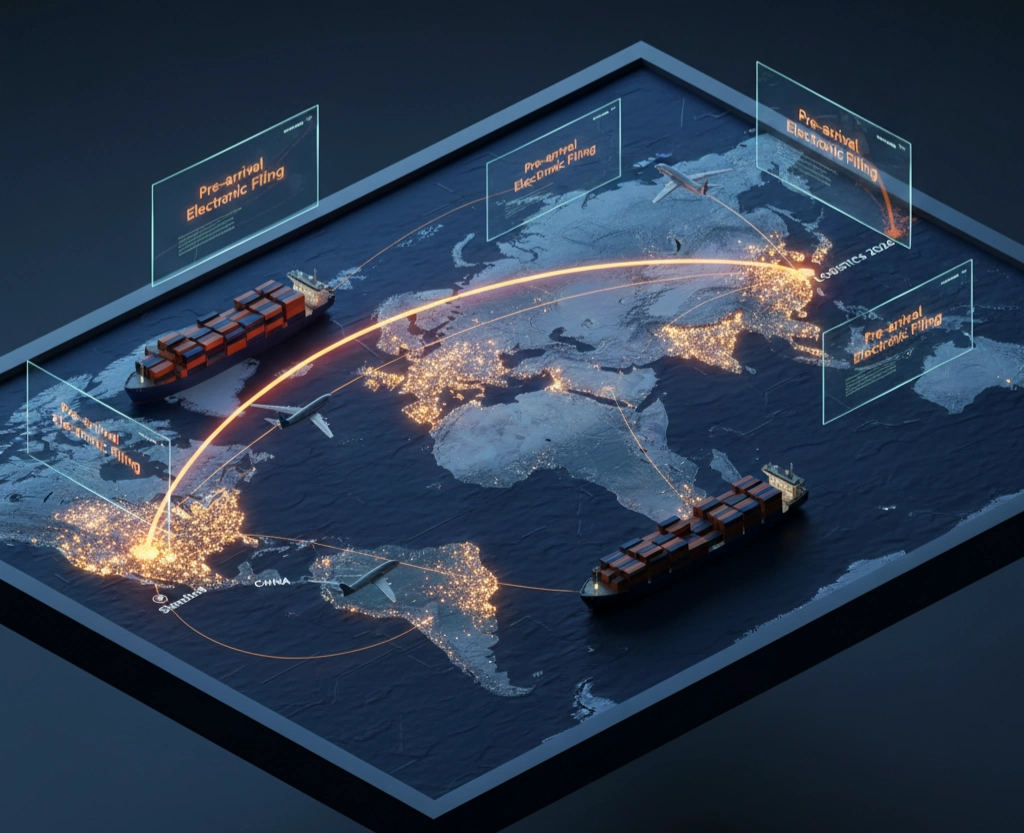
We processed 42,000 parcels through our South China to US network in the past six months. The single variable with the highest correlation to on-time delivery was not carrier selection, not route optimization, and not parcel weight. It was whether the shipment used pre-arrival electronic manifest filing or manual document submission at port of entry. The average detention gap between the two: 76.2 hours. This guide is built on that data.In 2026, the logistics landscape is dictated by two competing forces: the pressure to reduce shipping costs and the rising complexity of carbon tax frameworks and tightened customs enforcement. This guide is not for merchants looking for the cheapest shipping rate; it is for those building a resilient logistics architecture capable of handling 2026’s regulatory environment.
The Reality of Shipping Times in 2026
In 2026, “shipping time” is a variable function of customs clearance speed and port congestion patterns. We analyzed 42,000 parcels processed through our network from South China to US mid-continent hubs over the last six months. The data suggests that “average shipping time” is a misleading metric; the real differentiator is the clearance protocol.
- Non-Pre-Declared Shipments (Standard Entry): During peak congestion at LAX, these parcels averaged 87.4 hours in detention, waiting for manual manifest inspection.
- Pre-Filed ACE Entry Shipments: Utilizing CBP’s Automated Commercial Environment with pre-arrival electronic manifest submission, we maintained an average detention time of 11.2 hours at the same facility.
The lesson here is architectural: choosing a fast carrier is secondary to ensuring your logistics flow utilizes “前置电子申报” (pre-arrival electronic filing). If your current process relies on manual document submission at the port of entry, you are sacrificing 3+ days of transit before the package even moves to the sorting center.
Deconstructing 2026 Shipping Costs: The Hidden Taxes
In 2026, shipping costs aren’t just about freight rates. We track logistics spending through the lens of “Logistics Friction”—the unexpected costs caused by process failures.
INSIDER OBSERVATION
Last month, we managed a batch of electronic accessories via air freight with a base cost of $8.64/kg. However, the shipment lacked specific EPA compliance labeling. The customs broker held the entire batch in the inspection zone for 48 hours. To meet the merchant’s delivery SLA, we were forced to pay a $1,240 “emergency triage fee” to retrieve, re-label, and re-inject the cargo. The true landed cost of that batch jumped by 22.8% due to this process disconnect. In 2026, the most expensive shipping cost is not the freight; it is the emergency handling fee triggered by compliance oversights.
The Tiered Fulfillment Strategy
Successful merchants have moved away from “Direct-from-China” as a universal model. To maintain a competitive edge, we implement a Tiered Fulfillment Model that segments inventory based on SKU performance and lead-time tolerance.
| SKU Tier | Fulfillment Logic | Target Delivery |
|---|---|---|
| Core (Top 20% SKU) | US-based bulk replenishment | 2–3 Days |
| Seasonal/Trend | Air-Consolidated Injection | 7–10 Days |
| Long-tail/Niche | Direct Drop-ship | 12–18 Days |
Conclusion: Predictability as a Product Feature
By 2026, customers don’t just pay for the item; they pay for the predictability of its arrival. The competitive advantage goes to the merchant with the most transparent tracking and compliance architecture. Partnering with a provider that treats logistics as an engineering challenge is the only way to mitigate the rising costs of customs volatility. For a technical assessment of your current supply chain, contact our logistics team.
Frequently Asked Questions
What is the average shipping time from China to USA in 2026?
Transit times are highly dependent on the clearance method. Express services average 5–7 days, standard pre-cleared lines take 10–14 days, and multi-modal hybrid routes take 18–24 days. Predictability relies on pre-arrival electronic manifest filing.
How has the elimination of the $800 de minimis exemption changed my per-order cost structure?
Every China-origin order now requires a formal customs entry regardless of value. At $125–$300 per individually filed entry, a merchant running 50 orders per day is carrying $2,250–$4,500 in monthly broker fees that didn’t exist before May 2, 2025. The architectural fix is consolidating inbound inventory through a 3PL buffer so that duties are paid once on the bulk import rather than per individual order.
When should a merchant switch to US-based warehousing?
Once a SKU exceeds 35–50 consistent orders per day, the “Logistics Friction” of China-direct shipping—specifically return processing and transit variance—typically costs more than the overhead of local warehousing. Moving core SKUs to the US is a mandatory step for long-term scalability.