

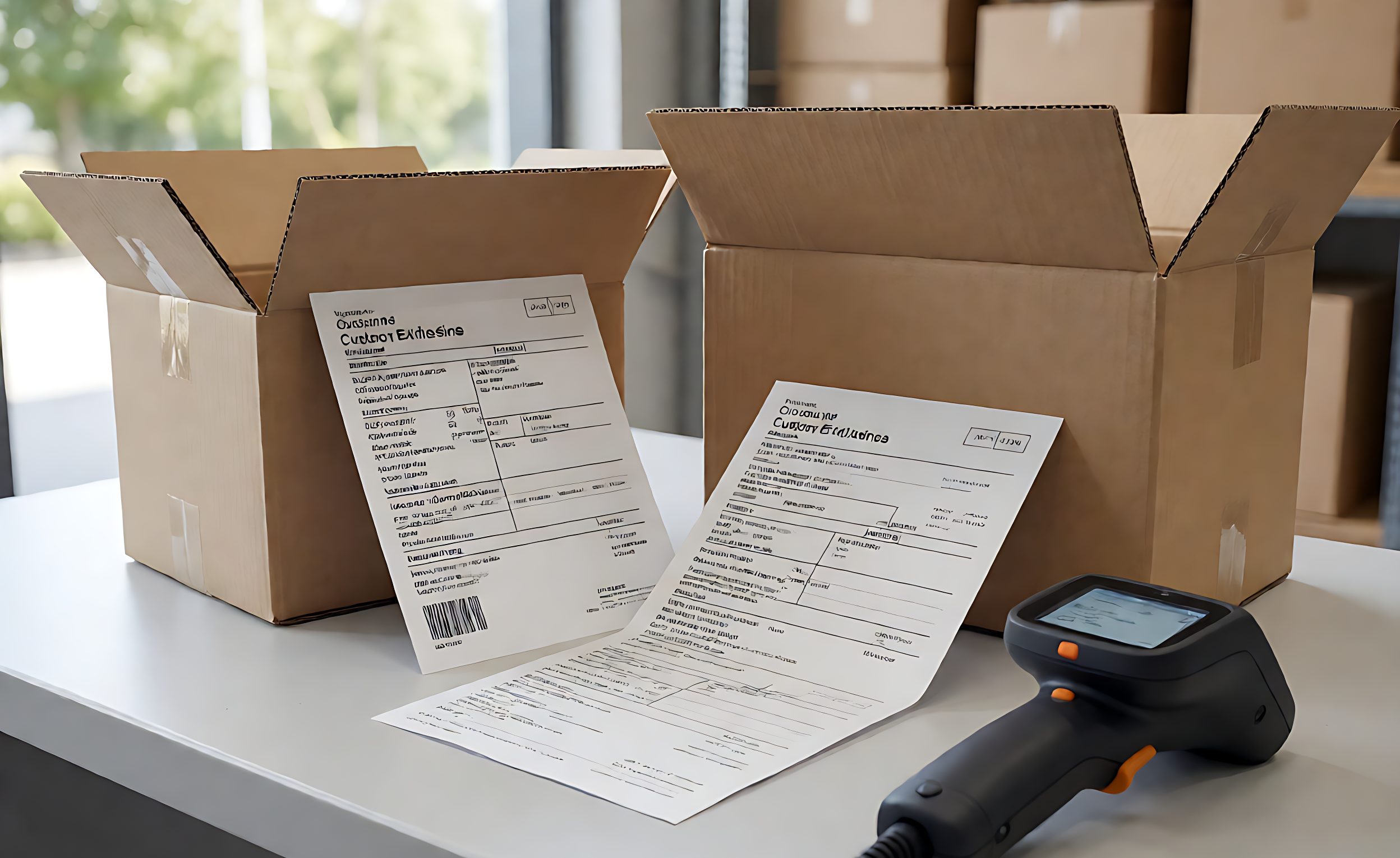
A cross-border parcel can be perfectly packed, correctly labelled and still sit in a bonded shed for two weeks because a declaration said “gift” or a valuation was missing. Customs authorities do not assess whether your product is good. They assess whether the paperwork is coherent. For a seller shipping hundreds of small parcels a week, that distinction decides whether the business has a working delivery promise or a reputation for silence.
Three separate charges tend to get confused: customs duty, import VAT or sales tax, and carrier handling fees. They are levied by different bodies, calculated on different bases and triggered by different thresholds. Treating them as one “import tax” is the most common source of pricing errors.

Duty: Calculated on Classification and Origin
Duty is a tariff applied to a commodity code at a rate that depends on the product category and, in many markets, the country of manufacture. The rate is not a percentage of your selling price. It is a percentage of the customs value, which is usually the transaction value of the goods plus freight and insurance to the border.
That means the HS code is the single most consequential line on the paperwork. Two visually similar products can fall under different codes with materially different rates: a textile garment and a textile accessory, a toy and a decorative item, a cable with a connector and a cable without. Getting the code wrong is not a rounding error – it is a systematic mispricing of every unit you ship, plus exposure when a customs authority audits.
Origin matters just as much. Preferential rates, trade programmes and, in some markets, additional duties all key off where the goods were made, not where they shipped from. A supplier that quietly switches production between two countries between orders can change your landed cost without changing your purchase price, so origin belongs on the purchase order as a declared field.

De Minimis: Relief, Not a Rule
A de minimis threshold is the value below which a market waives duty, and sometimes import tax, on incoming parcels. Below it, shipments are cleared in a simplified process. Above it, the full declaration applies.
Two things make this treacherous for sellers. First, thresholds change, and they have moved downward in several major markets as authorities respond to parcel volume. A pricing model built on a threshold that no longer exists produces orders that cost more to deliver than they earn. Second, the threshold is applied to the declared customs value of the consignment, not the price the customer paid at checkout, and not per item in the way sellers often assume. A single order split into two parcels to stay under a threshold is a practice authorities specifically look for, and the penalties are worse than the duty saved.
Import VAT, IOSS and Who Collects What
Import VAT is a consumption tax on goods entering a tax territory. It is separate from duty and usually calculated on customs value plus duty plus transport. Who collects it is the operational question: either the seller registers and remits it, or the carrier collects it from the buyer at the door.
Import one-stop shop schemes exist so that low-value consignments can be declared and taxed in a simplified way, with the tax collected at the point of sale rather than at delivery. For the buyer this is the difference between a clean checkout and a surprise invoice plus a handling fee from the courier. For the seller it means registration, correct tax display at checkout, and a monthly return. Collecting at the door is administratively simpler and commercially worse: it produces refusals, failed deliveries and chargebacks from customers who never agreed to pay the courier.
Technical Background
Duty is a form of tariff applied at the border, and the classification it depends on comes from the harmonised system administered internationally. The threshold relief that sellers rely on is a de minimis rule, a legal doctrine of triviality that customs law applies to value. The consumption tax side is described in more detail under value added tax, which explains why the tax is charged on the value added at each stage including import.
What Good Paperwork Looks Like
Every parcel needs a commercial invoice that states: seller and buyer, a precise description rather than a category, quantity, unit and total value in a named currency, HS code, country of origin, Incoterm, and the reason for export. Fields left blank, generic descriptions like “accessories” or “sample”, and values inconsistent with the marketplace order are the three things that most often trigger a hold.
Where a shipment is held, response time decides the outcome. Customs queries have deadlines, and parcels past the deadline are returned or destroyed at the sender’s cost. Build a process where the operations team sees a hold notification and can return a corrected invoice within a day, rather than discovering the problem when the customer asks where their order is.
Duty and tax belong in the same model as freight and packaging. The landed cost structure is described in where dropshipping margin actually goes, and the transport side of the calculation sits in choosing between air and sea freight. If you are shipping from a domestic warehouse instead, the US warehouse versus direct-from-China comparison sets out what changes. For the operational workflow around holds and rejects, see pre-shipment inspection practice.
FAQ
Is duty charged on the selling price?
No. Duty is assessed on customs value, generally the transaction value of the goods plus freight and insurance to the border, at the rate attached to the HS code.
Does de minimis relief also remove import VAT?
Sometimes, but not always. Some markets waive duty only, and still require VAT on low-value imports. Check the rule for each destination rather than assuming one threshold covers both.
Can I split one order into two parcels to stay under the threshold?
No. Splitting consignments to avoid a threshold is treated as evasion in most jurisdictions and carries penalties well beyond the duty avoided.
What is an import one-stop shop scheme?
A simplified registration that lets a seller declare and remit import VAT on low-value consignments in one return, so tax is collected at checkout instead of by the courier at the door.
What happens if a parcel is held by customs?
The authority issues a query with a response deadline. If no corrected documentation arrives in time, the parcel is returned or destroyed at the sender’s cost.
Who pays duty in a dropshipping model?
Whoever is named as importer of record under the declared Incoterm. If the buyer is importer and the term was not shown at checkout, disputes and refusals follow.
Do product samples need a commercial invoice?
Yes. Samples still require a declaration with a declared value, even where that value is nominal, and a stated reason for export.