

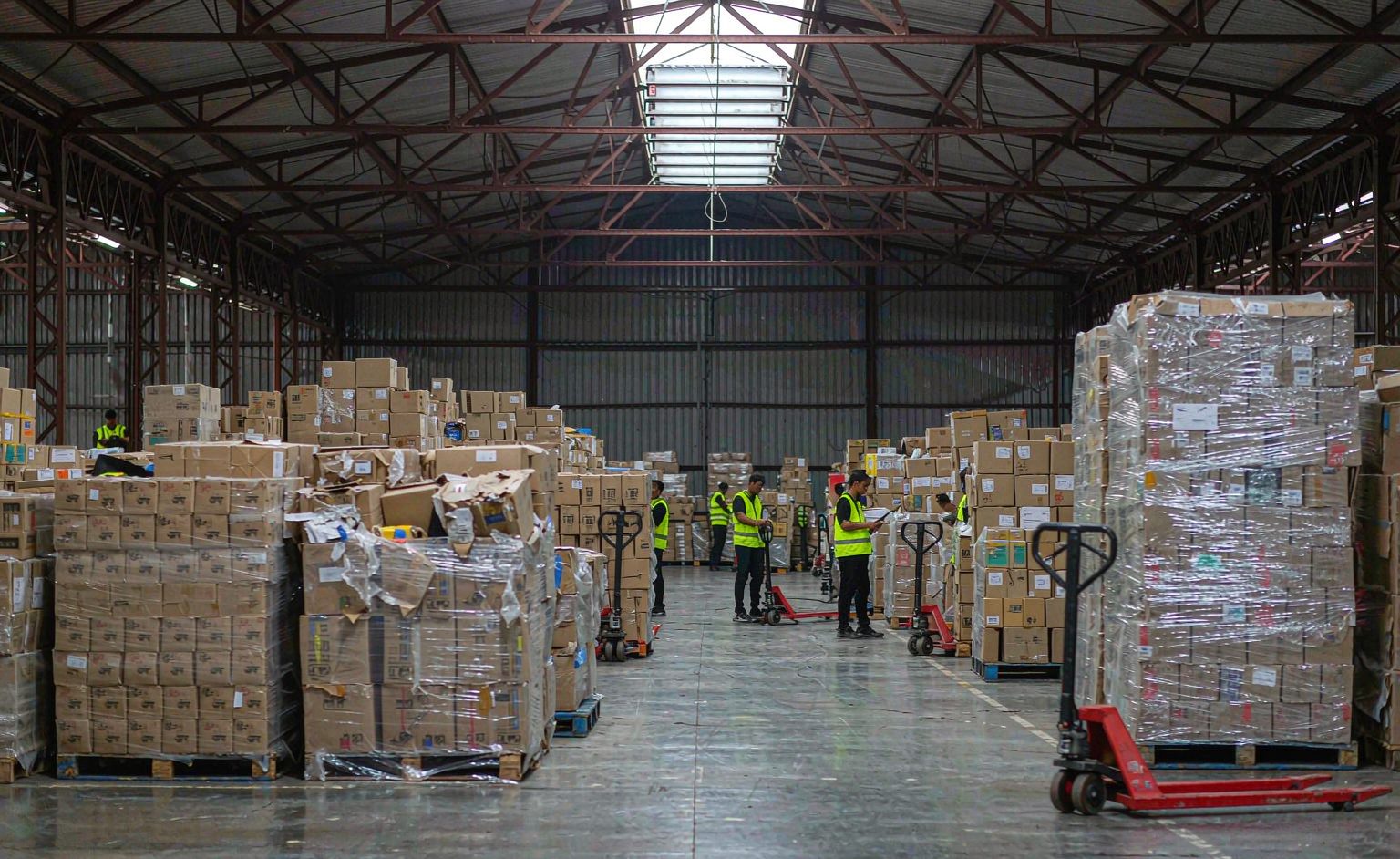
Peak season is won in September, not November. Every constraint that bites in Q4 — warehouse capacity, carrier cut-offs, staff availability, stock depth — is decided months earlier, and the decisions that cannot be reversed are the ones nobody makes until the volume arrives. Sellers who plan the peak as a schedule rather than a hope keep shipping; the rest discover their constraints one at a time. This guide covers what to decide and when.

Key Takeaways
- Peak capacity is booked months ahead; a Q4 slot requested in November does not exist.
- Carrier cut-off dates, not warehouse capacity, are usually the binding constraint.
- Inventory build timing trades storage cost against stockout risk.
- Staffing and temporary space are the two constraints that cannot be bought late.
- Lock capacity, cut-offs and surge pricing with the 3PL in writing before the season.
The Four Constraints, and When They Bind
Peak readiness is four separate planning problems with different lead times.
| Constraint | Lead time to secure | What happens if late |
|---|---|---|
| Warehouse capacity | Months — space is reserved | No slot, or a remote facility with worse economics |
| Carrier capacity | Weeks — peak surcharges and cut-offs published | Missed cut-offs and delivery promises |
| Inventory build | Weeks to months — production plus freight | Stockouts during the highest-margin period |
| Staffing | Weeks — seasonal labour market tightens | Slower pick-pack and missed ship-by windows |
The capacity-planning framework behind these lead times is explained in capacity planning references.
Carrier Cut-offs: The Usually-Binding Constraint
Most sellers plan warehouse capacity and are then defeated by the carrier calendar.
| Cut-off factor | What to establish | Why it matters |
|---|---|---|
| Order cut-off time | The latest order time for same-day ship | Sets the daily shipping window |
| Service-level cut-offs | Last ship dates for each delivery promise | Defines what you can promise customers |
| Peak surcharges | When they start and how they are billed | Changes shipping cost per order mid-season |
| Weather and disruption buffer | How much slack before the promise breaks | Determines whether a delay becomes a refund |
Get the cut-off calendar in writing and publish it internally, so marketing does not promise delivery dates the operation cannot meet. The cut-off concept and its planning use are described in cut-off date references.
Inventory Build Timing
Building stock early costs storage; building it late costs sales. The trade-off is a calculation, not a preference.
| Timing | Cost | Risk |
|---|---|---|
| Early build | Storage billed at peak occupancy for longer | Low stockout risk |
| Just-in-time build | Minimal storage cost | Any freight or production slip becomes a stockout |
| Staged build | Moderate storage; multiple inbound receipts | Balanced; requires receiving capacity |
A staged build is the practical default for most sellers: it limits peak-storage exposure while keeping enough depth to absorb one slip. Confirm the receiving capacity for each stage, because a warehouse that cannot process inbound quickly turns a staged build into a queue. The storage-basis question that drives this cost is covered in our 3PL pricing breakdown.
Staffing and Surge Capacity
The two constraints that cannot be bought late are people and space.
| Item | What to arrange | When |
|---|---|---|
| Seasonal labour | Pick-pack and receiving staff for the peak window | Book before the seasonal labour market tightens |
| Extended hours | Whether the 3PL runs extra shifts, and at what cost | Before the season, in the contract |
| Overflow space | Where excess inventory goes if the build overshoots | Before the build arrives |
| Contingency routing | A second ship location if the primary is saturated | Before peak, with the integration already built |
The contingency-routing row is the one that saves a season. If a second location is identified and integrated before peak, a saturation event becomes a routing change; if it is identified during peak, it becomes a crisis. The multi-location model is described in our multi-warehouse guide.
What to Lock Down in Writing
Five things should be agreed with the 3PL before the season, not during it: reserved capacity for your peak volume, the cut-off and ship-by commitments, surge pricing or overtime rates, the overflow plan, and the escalation contact. A 3PL who will commit to these in writing has a plan; one who says “we will make it work” does not. The selection questions for that conversation are in our 3PL selection guide, and the operational flow that has to hold under load in our order fulfilment flow guide.
Frequently Asked Questions
When should I start preparing for Q4 peak?
Warehouse capacity months ahead, carrier cut-offs weeks ahead, staffing weeks ahead. The constraints with the longest lead time are the ones that cannot be recovered if you start late.
What is usually the binding peak constraint?
Carrier cut-off dates, not warehouse capacity. Most sellers plan space and are then defeated by the carrier calendar and missed delivery promises.
Should I build inventory early or just in time?
A staged build is the practical default: it limits peak-storage exposure while keeping enough depth to absorb one freight or production slip.
What should I agree with my 3PL before peak?
Reserved capacity, cut-off and ship-by commitments, surge or overtime rates, the overflow plan, and a named escalation contact — all in writing.
How do I avoid stockouts during peak?
Stage the inventory build, confirm receiving capacity for each stage, and keep a contingency ship location identified and integrated before the season starts.
Do peak surcharges change my shipping cost?
Yes. Establish when surcharges start and how they are billed, and factor them into the peak-period margin rather than discovering them on the invoice.
What is the most common peak failure?
Promising delivery dates that the carrier calendar cannot support. Publishing the cut-off calendar internally prevents marketing from making promises the operation cannot keep.
Technical background: seasonal demand, capacity planning and cut-off dates explain the demand pattern and the planning framework referenced above.