

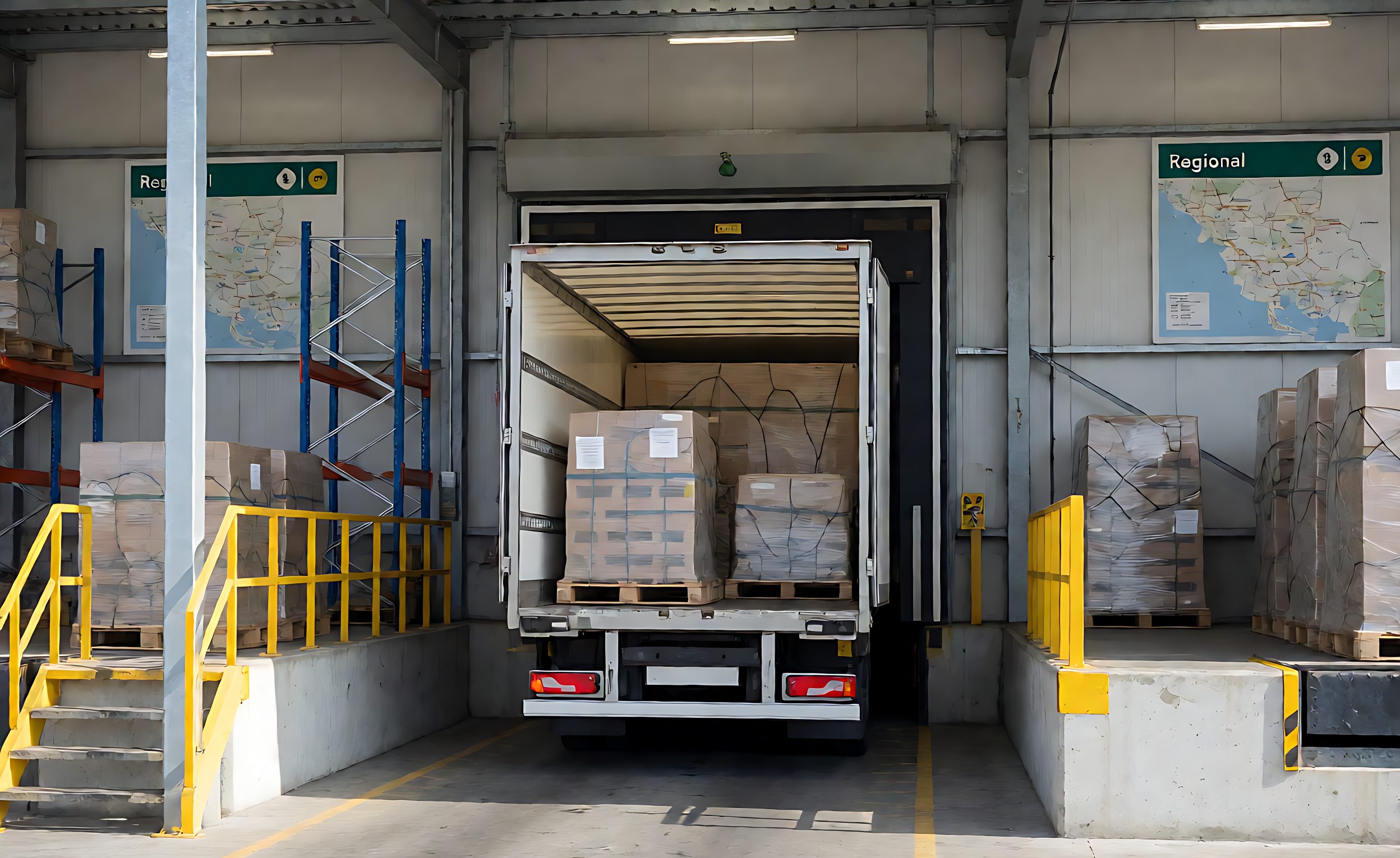
Parcel pricing is built around zones: the further a package travels from its origin, the more it costs. A warehouse on one coast serving customers nationally therefore pays the highest zone rate on a large share of its volume. Zone skipping is the practice of removing most of that distance from the parcel network by moving inventory into the destination region in bulk, then handing the last leg to a local service.
The economics are simple and the threshold is not. Consolidated freight is priced by weight or volume per pallet, not by parcel zone, so the per-unit cost of the long leg collapses once a shipment is big enough to fill space efficiently. The question is whether a given catalogue has enough daily volume into a region to justify holding stock there.

What You Are Actually Buying
A zone-skipped shipment replaces many long-haul parcels with one palletised line-haul move plus a short local delivery. The savings come from three places: the long leg moves at freight rates rather than parcel rates, the short leg bills in the lowest zones, and the average transit time drops, which reduces the support load that late deliveries create.
The costs are equally concrete. Inventory has to be positioned in advance, which means forecasting where demand will be rather than reacting to it. Stock held in a second location is stock that cannot be sold from the first, which increases total safety stock. And each additional node adds handling, receiving and reconciliation work.
The mechanism only works where demand is geographically concentrated. A catalogue with orders spread evenly across a continent gains little from one extra node; a catalogue with forty percent of volume in three metro areas gains a great deal.
Finding the Threshold
The calculation is a comparison of two per-unit totals for the same destination region:
- Direct parcel: average billed weight at the applicable zone rate, plus any residential or delivery-area surcharge.
- Zone skipped: line-haul cost per unit (pallet cost divided by units per pallet) plus inbound handling at the regional node plus the local parcel rate for the lowest zone.
Then apply the inventory cost of the second location: additional safety stock multiplied by carrying cost per month, divided by units shipped from that location. Below the threshold this term dominates and zone skipping loses; above it, the freight saving compounds and wins.
In practice the break-even usually sits where a region absorbs a meaningful daily volume – enough to build pallets on a predictable schedule rather than holding freight to fill space. If consolidation requires waiting three days to fill a pallet, the service promise deteriorates and the saving is not worth it.
How to Start Without Overcommitting
The low-risk version is a trial on one lane with one product family. Pick the region with the highest volume and the longest average zone, move a defined quantity, and measure four numbers against the forecast: actual line-haul cost per unit, local delivery cost per unit, damage rate, and delivered transit time. Run it for a full replenishment cycle, because a single week will not capture demand variability.
Then decide on expansion. Adding a node should follow demonstrated volume, not anticipated volume, and each node should be justified on its own lane economics rather than as part of a national rollout.

Contexto Técnico
Consolidating less-than-container or less-than-truckload quantities into a single move is the core of less-than-truckload shipping economics. The facilities that make regional injection practical are distribution centres, whose cost structure differs from a picking warehouse. The trade-off being managed sits inside the broader discipline of order fulfilment design.
What to Ask a 3PL Beforehand
Three questions separate a partner that can run this from one that will struggle: how they bill inbound at the second node, whether their system allocates inventory by region rather than by single location, and what happens to orders that cannot be fulfilled from the regional node. The last one matters most – a network that falls back to long-haul shipping without telling you will quietly erase the saving.
Regionalisation also interacts with inventory policy and cash, covered in preventing stockouts without holding inventory e ciclo de caixa de inventário de atacado. The network design question is discussed further in multi-warehouse operations, and the billing mechanics behind the comparison are in how 3PL pricing is structured.
Perguntas Frequentes
What is zone skipping?
Moving inventory into a destination region by consolidated freight, then shipping the final leg locally, so the long distance is billed at freight rates instead of high parcel zones.
How much volume do I need to justify it?
Enough daily volume into one region to build pallets on a predictable schedule. If you must wait days to fill a pallet, the service impact outweighs the saving.
Does zone skipping reduce transit time?
Usually yes, because the long leg moves as freight and the final leg is a short local delivery, though consolidation scheduling can add a day.
What is the hidden cost?
Extra safety stock. Inventory split across nodes requires more total buffer than inventory held in one place, and that capital has a monthly cost.
How do I measure whether a trial worked?
Compare line-haul cost per unit, local delivery cost per unit, damage rate and delivered transit time against forecast over a full replenishment cycle.
Can a 3PL run this for a small seller?
Yes where the 3PL already operates multiple nodes and can allocate inventory by region. Ask how they bill inbound and how they handle regional stockouts.
Is zone skipping the same as drop shipping from a regional supplier?
No. Zone skipping positions your own inventory in advance; regional drop shipping uses a supplier’s stock, which changes control over packaging and availability.