

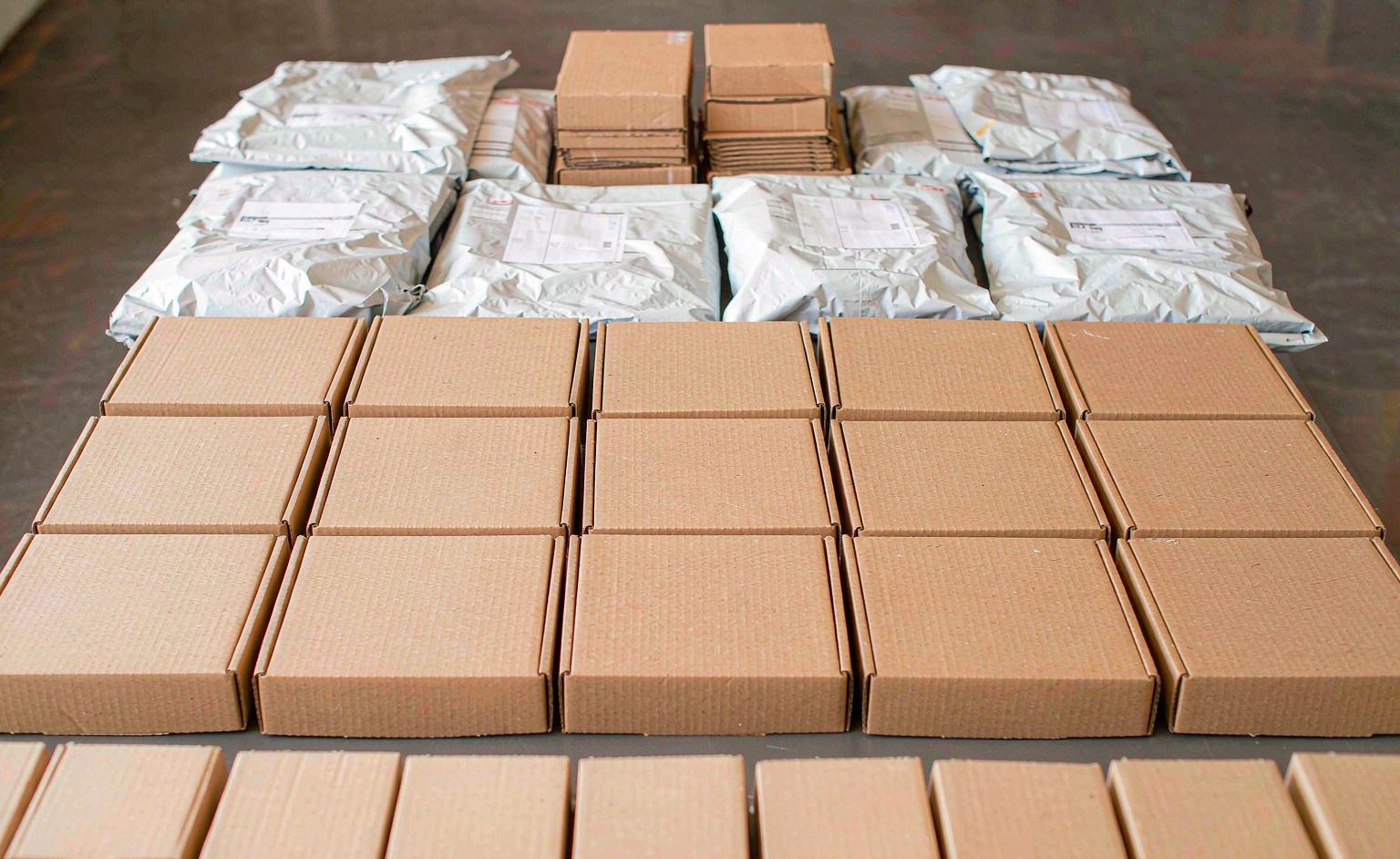
Custom packaging is one of the few places a dropshipper can genuinely differentiate, and it is also where margin quietly leaks. A branded mailer costs more than a plain one, a rigid box costs more than a mailer, and an insert card adds a print run minimum to every SKU. Sellers who spec the full package before checking the cost per unit end up with beautiful packaging that turns a healthy margin into a thin one. The fix is not to abandon custom packaging; it is to specify it against the cost structure.
Ключевые выводы
- Packaging cost is driven by dimensions, material, print area and quantity — in that order.
- MOQ is set by the packaging layer: print run, container mould, or box blank size.
- Dimensional weight means a bigger box bills heavier even at the same actual weight.
- Standardise the container across SKUs; vary only the label or insert.
- Get packaging cost per unit at your real order volume, not at the supplier’s minimum.
The Options, and What Each Actually Costs
Four packaging levels cover most dropshipping operations, and the cost step between them is larger than most sellers expect.
| Вариант | What it is | Cost driver | Лучший выбор для |
|---|---|---|---|
| Plain mailer / poly bag | Unbranded protective envelope | Material and size only | Testing, low-margin SKUs |
| Branded mailer | Printed poly or paper mailer | Print area and plate cost | Brand-led, lightweight goods |
| Custom corrugated box | Printed box sized to the product | Board grade, dimensions, print | Fragile or premium goods |
| Rigid or premium set | Rigid box, tissue, insert card, seal | All of the above plus assembly | High-ticket, gift categories |
The jump from branded mailer to custom box is the expensive one, because a box introduces dimensional weight, void fill and assembly labour. Whether that jump pays depends on your product’s value and fragility, not on how the unboxing looks in a photo. The cost drivers behind each level are covered in our packaging cost and quality guide.
How MOQ Is Structured
Packaging MOQs are layer MOQs, and the binding layer is usually not the one sellers expect.
| Layer | What sets the minimum | How buyers hit it |
|---|---|---|
| Plate or plate-less setup plus a minimum run | One artwork across multiple SKUs | |
| Container | Box blank size, bag size, or mould for rigid inserts | Standard sizes over custom dimensions |
| Assembly | Line setup for kitting inserts | Skip kitting; insert at the 3PL instead |
| Total program | Sum of the above at your real volume | Consolidate across SKUs before ordering |
The practical rule: SKU count drives packaging MOQ more than volume does. A seller with twenty SKUs and one box size has one minimum; a seller with twenty SKUs and twenty box sizes has twenty. Consolidating container sizes is the single highest-leverage move. The options and their trade-offs are compared in our custom packaging options guide.
The Dimensional Weight Trap
This is the cost that survives the packaging quote and appears on the shipping invoice.
| Фактор | Effect | What to do |
|---|---|---|
| Box dimensions | Billed weight may exceed actual weight | Size the box to the product, not to a standard range |
| Void fill volume | Adds cost without adding protection efficiency | Right-size fill; avoid over-boxing |
| Multi-item packing | One box for several items beats several boxes | Consolidate where product allows |
A box that is 2 cm larger than necessary on two dimensions can push a shipment into a higher billed-weight bracket, and that cost repeats on every order for the life of the program. Measure the product properly before ordering packaging — the method is covered in our box measurement guide.
Where Custom Packaging Gets Applied
One decision that changes both cost and quality: whether packaging is assembled at the supplier or at the fulfilment provider.
| Approach | Advantage | Компромисс |
|---|---|---|
| Pre-assembled by supplier | Simpler at the 3PL; consistent presentation | Higher inbound freight; assembly cost in the unit price |
| Flat-packed, assembled at 3PL | Lower inbound freight; flexibility | Adds a per-order task and pick-pack cost |
| Insert applied at 3PL | Marketing insert can change without repackaging | Another per-order task |
Flat packing is usually the better default for dropshipping, because inbound freight is paid once per unit while assembly is paid once per order — and for a store with repeat customers the order count eventually exceeds the unit count. Confirm the per-order assembly cost before choosing, because it lands in the pick-and-pack line of the 3PL quote covered in our 3PL pricing breakdown.
FAQ
What is the cheapest custom packaging option?
A branded poly or paper mailer. It carries only material and print cost, with no dimensional-weight penalty or void fill. It suits lightweight, non-fragile products.
How much does custom packaging cost per unit?
It depends on dimensions, material grade, print area and quantity. Get the figure at your real order volume rather than at the supplier’s minimum, because the minimum overstates the unit cost for most sellers.
What MOQ should I expect for custom packaging?
It is set by the binding layer — usually the print run or the container size. Standardising container sizes and reusing one artwork across SKUs is the fastest way to bring the effective minimum down.
Does a bigger box cost more to ship?
Yes, through dimensional weight. Billed weight can exceed actual weight, so a box only slightly larger than needed can push a shipment into a higher bracket on every order.
Should packaging be pre-assembled or flat packed?
Flat packed is usually better for dropshipping: inbound freight is paid once per unit, assembly once per order. Confirm the per-order assembly cost at your 3PL first.
Can I use one box for multiple SKUs?
Yes, and it is usually the right move. SKU count drives packaging MOQ, so one container size across several SKUs collapses several minimums into one.
How do I keep custom packaging from eroding margin?
Specify the container against the product’s dimensions, standardise across SKUs, and get the cost per unit at your real volume. Then compare against the shipping-cost effect, not just the packaging price.
Technical background: packaging and labelling, corrugated box design и minimum order quantity explain the packaging options and the ordering framework referenced above.