

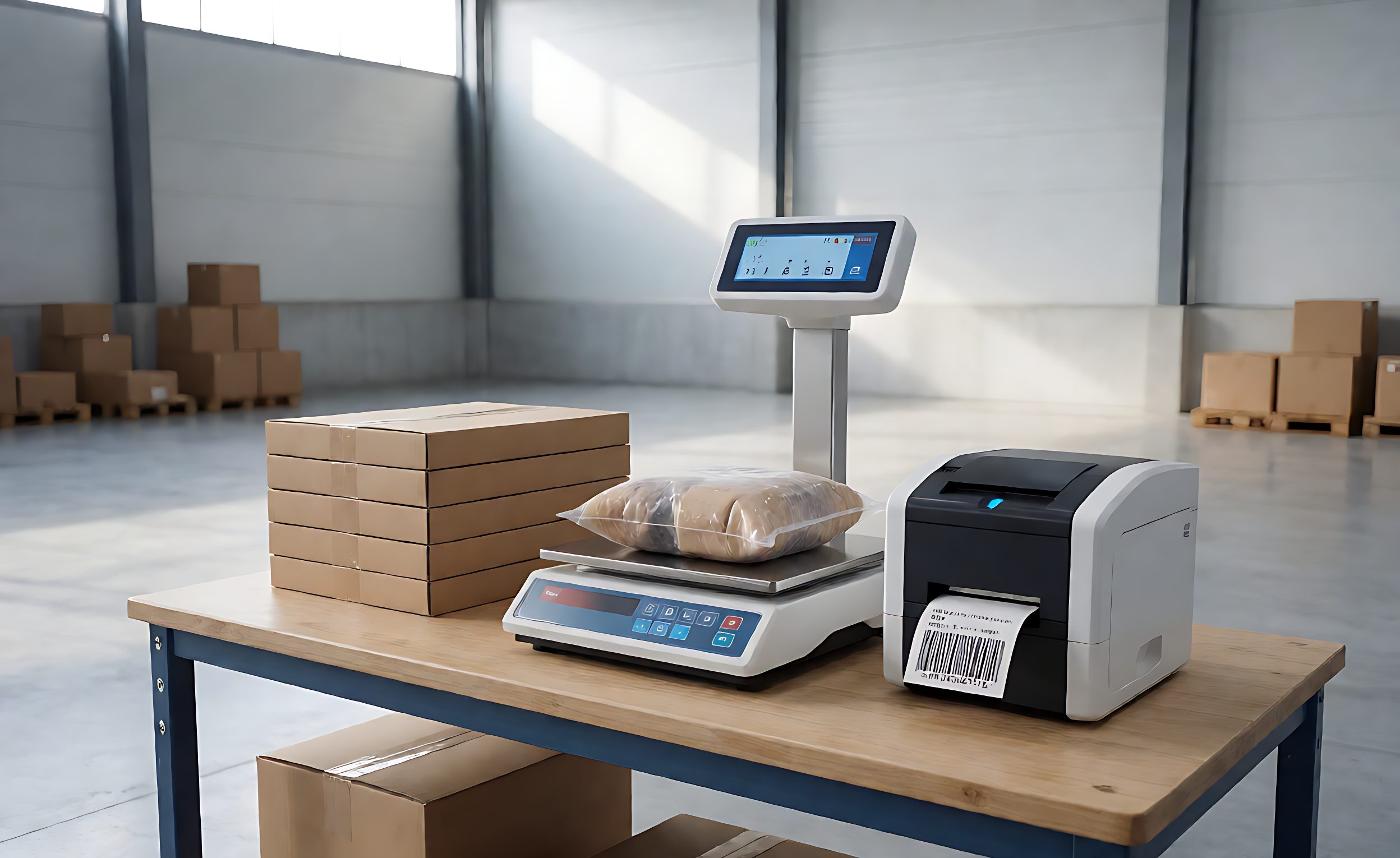
A marketplace receiving dock is not a customer service desk: nobody evaluates your product, your brand or your price. The inbound process checks one thing: whether each carton and each unit matches the platform’s preparation specification. Units that pass flow onto shelves and become sellable within a day. Units that fail are held, reworked for a fee, and the selling window you planned around quietly disappears.
Prep compliance is therefore not an administrative detail. For an FBA seller it is part of the product’s landed cost, and it is decided long before the goods reach the warehouse – usually at the factory bench where the unit is bagged, labeled and cartoned.

What Inbound Compliance Actually Covers
Marketplace inbound rules share the same skeleton, whether the platform is Amazon or a regional equivalent:
- Unit labeling. Every sellable unit carries a scannable barcode that matches the offer, either the platform’s own code or, where enrolled, the manufacturer barcode the platform can accept.
- Unit packaging. Loose or multi-part items are bagged or contained; bags above a defined opening size carry a suffocation warning; liquids, textiles and fragile categories have their own additions.
- Carton rules. Master cartons respect weight and dimension limits, carry the required shipment labels on the outside, and contain a single destination in most cases.
- Category prep. Certain categories require specific treatment – apparel is poly-bagged, glass is bubble-wrapped, sets are banded together – and prepped units must survive a drop test.
The detail varies by marketplace and changes over time, but the principle does not: the platform specifies the end state of the unit, and the seller produces it before handoff.
The Failure Points That Generate Fees
Most prep charges trace back to a handful of recurring mistakes:
- Label errors. Wrong barcode, label over a seam or curve, label applied to the bag instead of the product where the spec requires it, or print quality too faint for the scanner. Each failed scan at receiving becomes a handling charge.
- Missing or misplaced warnings. A bag without the required warning printed on it, or a box-in-box shipment missing its outer label, gets re-bagged at the seller’s cost.
- Carton weight and dimension violations. Oversized or overweight cartons are split or rejected, and the split work is billed per unit.
- Quantity mismatches. The carton contents disagree with the shipment file, which triggers a research fee and holds the shipment while it is resolved.
- Mixed shipments. Cartons destined for different fulfillment centers consolidated into one box, which forces manual sorting across the board.
They are bench-level discipline issues, which is why the fix belongs in the packing process rather than in a training memo.

Prepping at the Source or at a Domestic 3PL
Two locations can do the work. Prepping at the factory keeps handling to one touch: the unit is bagged, labeled and cartoned as part of production, and the cartons ship directly to the port. The risks are quality drift – labels reprinted from a stale artwork file – and rework costs if a shipment is rejected after crossing an ocean.
Prepping at a domestic 3PL moves the work closer to the marketplace warehouse. The 3PL receives bulk cartons, prints labels from your live data, applies category prep and ships compliant cartons onward. It costs a per-unit prep fee, but it corrects errors while they are still a domestic truck ride away and adapts the same inventory across marketplaces with different specs. The comparison, including how fees stack up, is set out in FBA prep versus 3PL prep, labeling and fees. The deciding variables are label volatility, reject risk and whether one production run feeds more than one platform.
Building Prep Into the Purchase Order
The specification must travel with the order. The purchase order or work instruction to the factory should state: barcode source and format, label placement with a photo reference, bag gauge and warning text, carton dimensions, weight limit, master carton quantity, and the master carton labeling itself. Compliance requirements beyond the platform – product safety marks, language requirements, country of origin – are specified in product compliance and labeling for bulk importers, on the same document so no bench sees conflicting specs.
Carton geometry needs its own attention: a technically compliant carton can still be economically wrong when interior volume is wasted, and the cost repeats on every freight leg. The dimension-and-cost logic is the same as dimensional weight and carton right-sizing, and for printed retail packaging the spec process in custom packaging costs and quality checks is where the bag, warning text and label zones should be locked.
Technical Background
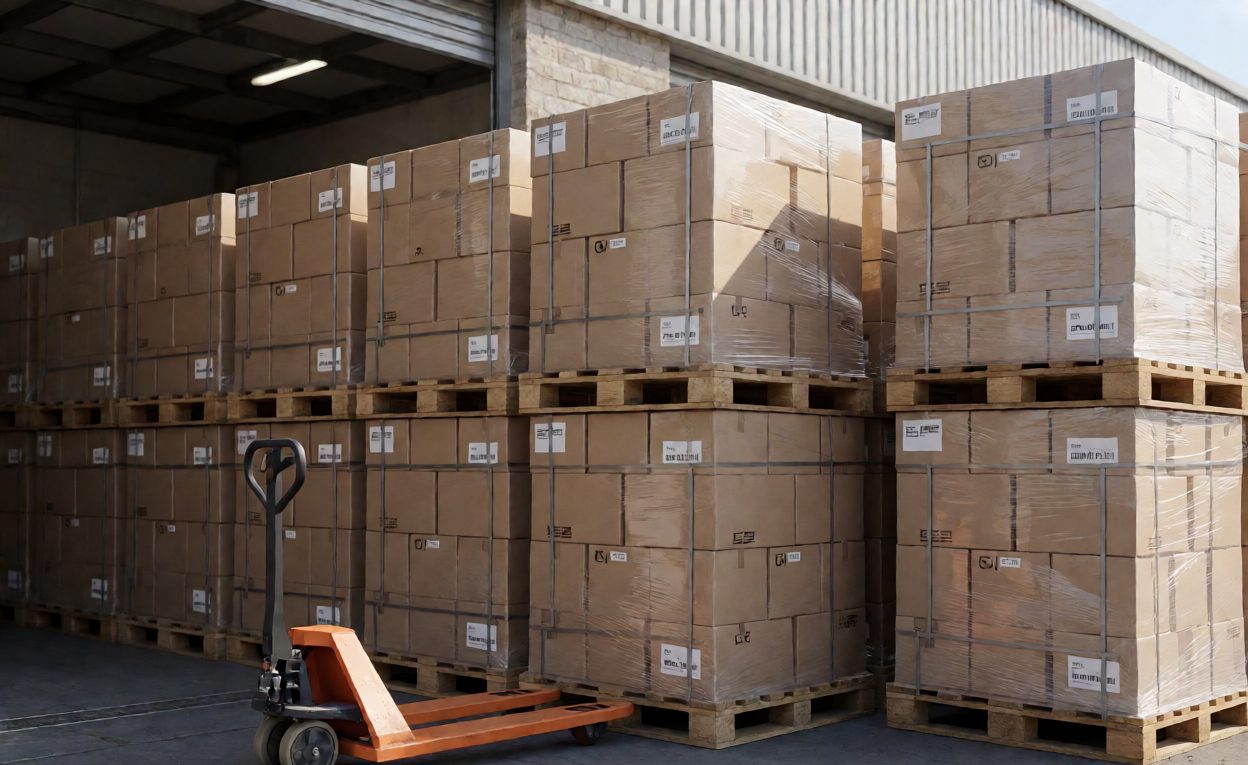
The barcode that marketplace logistics runs on is a linear barcode symbology descended from retail item coding; its scannability constraints explain most label placement rules. Protecting a product through distribution is the field of packaging engineering, source of bag gauges, drop tests and warning labeling requirements. The unit load the cartons finally form is a pallet, and pallet stability is why platforms bound carton weight and require uniform stacking in the first place.
Frequently Asked Questions
What happens if a unit fails the inbound spec?
The warehouse reworks it for a per-unit fee or holds it; large failure volumes can delay the sellable date.
Can the factory apply marketplace barcodes?
Yes, and it is the cheapest place, provided artwork, format and placement are specified in writing and verified on a sample before the run.
Do all units need poly bags?
Loose, multi-part, textile and small items generally do, and bags above a defined opening size must carry a printed suffocation warning. Fully enclosed retail boxes often do not.
What are the standard carton limits?
Most platforms cap single cartons at around 20 to 25 kilograms, with dimension caps that vary by program. Exceeding them triggers splitting or rejection at the seller’s cost.
Is marketplace prep cheaper at the factory or at a 3PL?
Per unit the factory is usually cheaper. Total cost can favor a 3PL when labels change often, one run feeds several marketplaces, or rejection would arrive after an ocean crossing.
Why did my shipment get a quantity mismatch charge?
Carton contents disagreed with the shipment file – a short count, an overage or a wrong SKU – and the warehouse bills for research time.
How do I keep prep specs from drifting between orders?
Attach the written prep spec and photo references to every purchase order, and re-approve a prep sample whenever artwork, bag gauge or carton spec changes.