

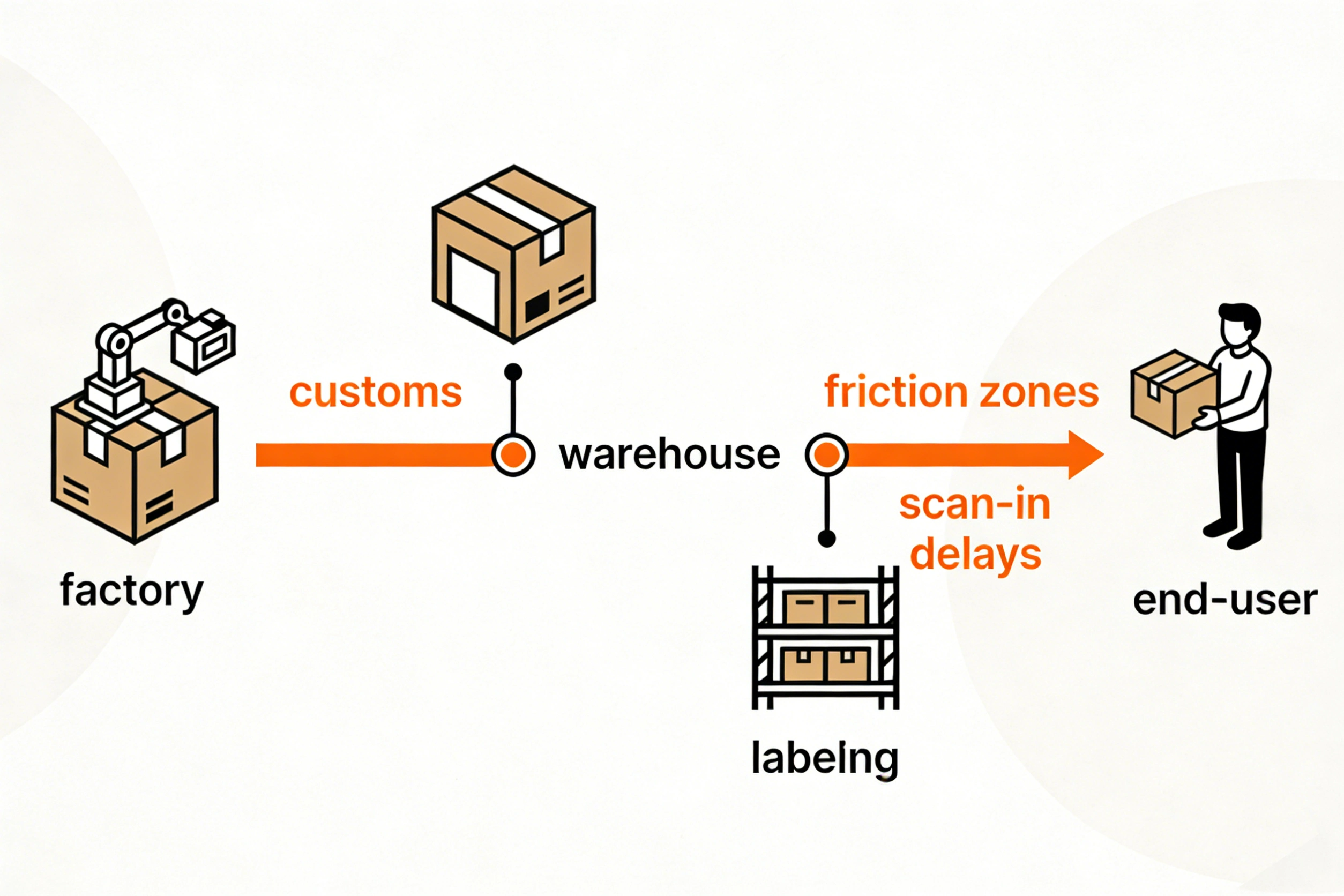
Scaling a dropshipping business to 100 orders a day isn’t just a marketing goal; it’s a critical point for your infrastructure. From our experience at Dropioneer, we’ve seen that many merchants who reach this level struggle to grow further because their fulfillment systems can’t keep up with the demands of manual, “spreadsheet-based” management. In some warehouses we’ve worked with, even a 5% increase in volume led to a staggering 300% rise in customer service inquiries, as the back-end logistics couldn’t cope with the delays. If you’re targeting 100 daily orders, you’re not merely running a “store” anymore—you’re part of a vast global logistics network. Here’s how to make that transition effectively.
The “Manual Trap” at 30 Orders/Day
When you have between 0 to 30 orders, you essentially run the system yourself. You check tracking numbers manually, respond to every email, and probably keep track of inventory using a spreadsheet. While this method is not the most efficient, it works because you can directly influence the results. However, once you surpass 30 orders, this approach can become a burden. The main issue here is what I call the “Spreadsheet-API Disconnect.” If you reach 100 orders and are still manually exporting CSV files to your third-party logistics provider or entering tracking numbers into your store, you’re already at a disadvantage. The costs associated with this friction—like the time wasted on manual data entry, mistakes in address formatting, and the unavoidable 24-hour delay in syncing inventory—will eat into your profits faster than your advertising expenses ever could.
INSIDER OBSERVATION
We audited a store last year that was stuck in this trap. They were doing 45 orders/day. Every morning, their team spent 90 minutes manually uploading orders to the 3PL’s portal. One Tuesday, the CSV format changed slightly. The system failed to map 12 addresses. Those 12 customers didn’t get their shipping notifications. That triggered a support ticket cascade that tied up their only CS person for three days. They missed the ad-spend window for that week, their ROAS tanked, and they never recovered that momentum. The error wasn’t the CSV—it was the decision to rely on a non-integrated manual bridge at that volume.
The Logistics Friction Coefficient
As you scale, “Logistics Friction”—the hidden tax of returns, missed injections, and bad scans—doesn’t grow linearly; it compounds. The difference between a store that makes $10k/month and one that makes $100k/month often lies in the Inbound Velocity vs. Outbound Throughput.
If your 3PL cannot clear your inbound inventory receipt within 4–6 hours of arrival, your store is operating on “borrowed stock.” You are selling units that aren’t physically ready to move. At 100 orders per day, this leads to a “phantom sale” disaster where you sell 50 units, but only 20 are actually labeled and ready for last-mile injection. The resulting refunds and gateway fees are a permanent drag on your profit and your processor’s risk profile.
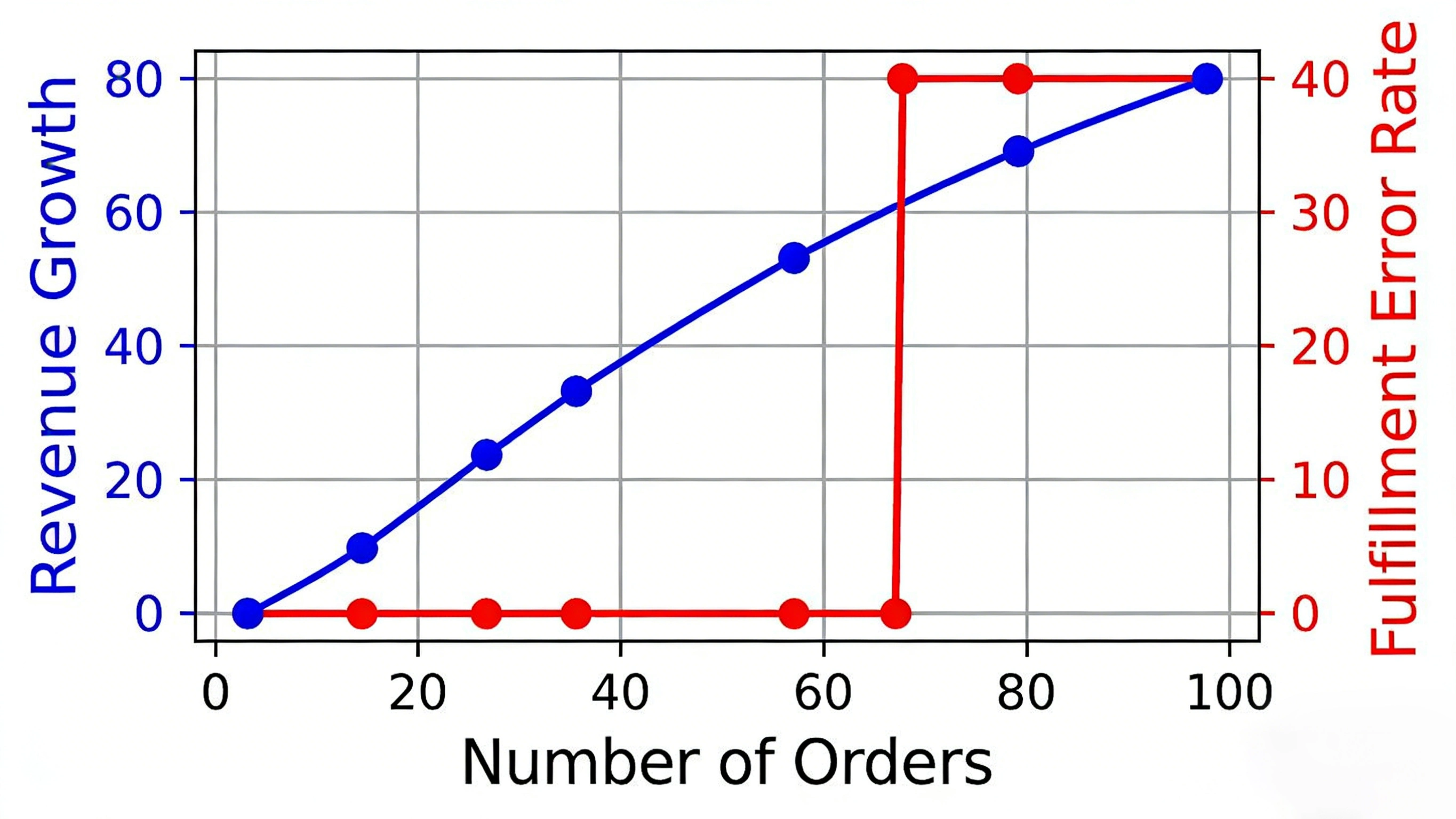
Architectural Requirements for 100 Orders/Day
To cross the 100-order barrier, you must shift from “order management” to “system orchestration.” Your infrastructure needs to handle three specific stress points:
| Stress Point | Manual Approach (0-30 Orders) | Architected Approach (100+ Orders) |
|---|---|---|
| Inventory Sync | Daily spreadsheet update | Real-time API push (<300ms latency) |
| SKU Verification | None / Visual | 90-day Golden Sample refresh |
| Last-Mile Strategy | Default shipping | Zone-skipping / Local injection |
Managing the Batch Shift
Scaling to 100+ orders usually involves diversifying your catalog. With more SKUs comes the risk of “Batch Shift”—where a supplier changes a material or manufacturing process without notifying you. A 3% change in fabric thickness or a different internal plastic bracket can cause a 15% increase in return rates.
Our requirement for all high-volume merchants is a “Golden Sample” audit every 90 days. We keep a physical, verified master unit in our warehouse. If a new batch doesn’t match the weight (within ±4g) or the structural specs of the Golden Sample, we flag the inventory as “Non-Saleable” across all channels automatically. You cannot afford to lose your store’s reputation because a factory decided to save $0.05 on materials.
INSIDER OBSERVATION
We handled a merchant who grew from 20 to 120 orders in two weeks. They were ecstatic. But they didn’t prepare the supply chain. They had 120 orders/day, but their supplier could only output 80 units/day. The warehouse floor became a graveyard of “Partial Shipments.” The customer experience was catastrophic—half the orders arrived, the other half were backordered for 10 days. They spent all their profit on refunding shipping costs and paying for expedited re-shipments just to keep the store from being banned. Scaling isn’t about how many orders you can get; it’s about how many you can physically fulfill without breaking the SLA.
The 100-Order Diagnostic Checklist
If you are pushing 100 orders a day, use this filter to identify your next failure point:
- API Latency: If your inventory status takes more than 5 minutes to update after a sale, you are selling phantom stock.
- Return Rate: Is your return rate creeping above 1.8%? That is the threshold where your QC architecture is failing.
- Sourcing Strategy: Are you still using “Direct-from-China” shipping? At 100 orders, you should be moving to local warehousing and fulfillment to reduce transit friction and improve brand perception.
- Automation: Does every order flow from store to carrier without human intervention? If not, you are paying for labor that should be handled by your 3PL architecture.
Scaling is not about speed; it is about predictability. If you can predict exactly how a batch of 500 units will behave, you can scale to 5,000 units with ease. For a technical assessment of your current fulfillment architecture, contact our team.
Frequently Asked Questions
Why do most dropshipping stores fail at the 50-100 order/day mark?
Failure at this stage is rarely about marketing. It is about “Logistics Friction”—when manual processes (spreadsheets, manual tracking) can no longer handle the volume, leading to order backlogs, inventory phantom sales, and critical customer service breakdowns that overwhelm the merchant’s operational capacity.
At what point should I stop shipping directly from China?
Once you cross 30–40 consistent orders per day, the latency and lack of physical quality control inherent in China-direct shipping begin to degrade your profit margins through high return rates and customer dissatisfaction. Transitioning to a localized 3PL architecture becomes a necessity for long-term scalability and brand protection.
Is it possible to automate the entire fulfillment loop?
Yes. A mature fulfillment architecture should be 100% API-driven. From the moment the customer hits “Buy” to the moment the carrier scans the parcel at the sorting facility, the entire process—including inventory deduction, QC flag, label generation, and tracking push—should require zero human intervention.