


Quick answer: A returns process should tell warehouse staff what to inspect, how to record condition and who approves each disposition. Define separate routes for resale, repack, quarantine, supplier review and non-resellable items, then connect the return authorization to inventory and customer communication. Never assume a returned item is sellable until the brand’s criteria are met.
1. Create a return record before the parcel arrives
Use a return authorization or equivalent reference that connects the customer, original order, SKU, quantity and reason for return. Decide which returns can be accepted, how exceptions are approved and what information the warehouse needs before receiving the parcel. If a customer sends an item without an authorization, give the provider a defined way to identify and hold it rather than mixing it into regular inventory. Keep the original order identifier visible so the brand can reconcile refund, replacement and stock records. Clear intake information reduces the risk of a parcel being misplaced or the wrong item being credited to an account.
2. Set inspection categories staff can apply consistently
Define what the receiver checks: product identity, quantity, packaging, visible condition, included accessories, signs of use and any documentation specific to the product. Use a small number of condition codes with plain-language definitions and example photographs. Avoid subjective labels such as “good” unless the brand explains what evidence qualifies. State when an item needs a second review or should be held untouched for supplier or quality assessment. Train the provider to record observations, not to make an unapproved commercial decision. The inspection record should identify the return reference, date, SKU and person or system that recorded the condition.
3. Separate the disposition routes
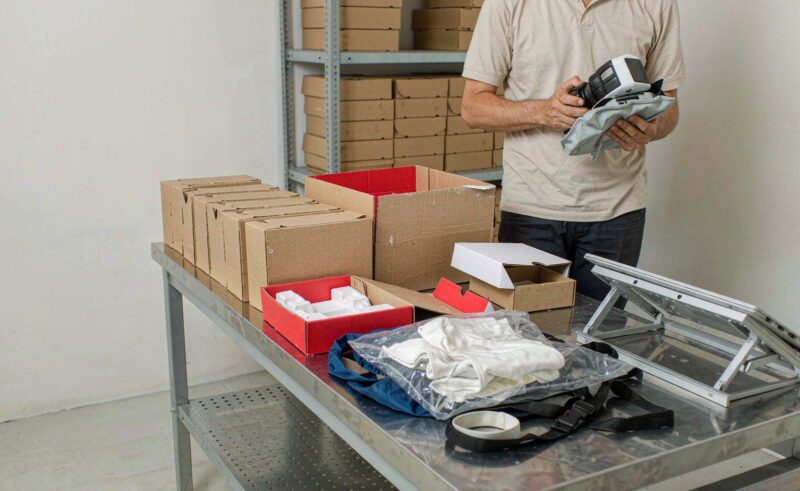
Create a route for each allowed outcome: return to sellable inventory, repackage or relabel, place in quarantine, send for repair or supplier review, recycle or discard, or return to the customer when required. The brand should define which route is allowed for each product type and condition. Some goods may have market, hygiene or warranty considerations that prevent resale; confirm those rules with the product owner and qualified adviser. Make the warehouse location or status for each route explicit. Do not allow “restock” to be selected simply because a unit looks intact if the brand requires additional checks.
4. Define restock criteria and inventory timing
State when an item becomes available for sale again. Is it immediately after an inspection, after repackaging, after quality approval or only after a system update? Identify who changes the inventory status and how the return quantity is matched to the SKU. If an item is incomplete, has a damaged retail carton or needs a replacement accessory, define whether it can be sold as a different grade or must remain unavailable. Tell the provider how to handle a partial return from a bundle. Inventory should reflect a decision the brand can explain, not merely the physical location of a returned parcel.
5. Connect return routing to refunds and replacements
Customer support needs a clear status that shows whether the parcel was received, inspected and routed. Decide which event triggers a refund or replacement under the brand’s policy and make sure the warehouse does not communicate a promise it cannot authorize. If a replacement ships before a return is inspected, keep the replacement order linked to the original case. Define what information is returned to the store or support system and how exceptions are escalated. Review the customer’s emails and status messages so they use the same terms as the operational workflow. Clear status mapping helps a support agent answer “where is my return?” without searching through separate systems.
6. Handle supplier claims and product-quality patterns
When a returned item may indicate a product or shipping issue, capture enough evidence for the brand to assess it. Define which photographs, lot or batch identifiers, packaging observations and customer notes are useful, and how a sample is preserved if a supplier review is needed. Establish a threshold or decision owner for escalating repeated issues; the threshold should reflect the brand’s own quality process rather than an invented universal number. Keep the returned unit in the appropriate hold location until the owner decides whether it can move. These records can reveal recurring damage or product concerns that would otherwise appear as isolated return cases.

7. Decide how non-resellable items are handled
Specify whether items that cannot be resold are returned to the customer, held for review, sent to a supplier, recycled or disposed of under a documented process. Name who authorizes the route and what evidence is retained. Consider how product privacy, hazardous-material rules or local waste requirements apply to the specific product and destination; seek qualified advice where necessary. Do not leave the warehouse to guess which action is permitted. If the item belongs to a bundle, define what happens to the remaining components and how inventory is adjusted. A clear rule protects the brand and gives the provider a consistent way to close a return case.
8. Measure the workflow and audit exceptions
Track the dates of authorization, receipt, inspection, disposition and inventory update so the team can see where cases wait. Review a sample of each route and compare the system status with the physical location. Check that photographs and condition codes are present when required. When a case is delayed, note the cause and owner rather than only the age of the return. Regular review helps the brand find confusing instructions, incomplete SKU data or a mismatch between refund policy and warehouse operations. Use the findings to update the procedure and train affected staff, then confirm the new version is in use.
9. Document the return playbook before launch
The playbook should include the authorization fields, accepted SKUs, inspection categories, disposition routes, inventory rules, customer-status mapping, supplier-claim process and escalation contacts. Keep the version and effective date visible to the store team and fulfillment partner. For help aligning returns with storage and order handling, review Dropioneer fulfillment operations and agree on the data, exception owners and reporting cadence before the first return is processed.
For buyers comparing available product and supplier options, see Dropioneer fulfillment operations.
Questions buyers often ask
Should every returned product be restocked if the package is unopened?
Only if the brand’s documented criteria allow it. Identity, condition and any product-specific restrictions should be checked before inventory is made available again.
Who decides whether a return can be resold?
The brand or a designated quality owner should set the criteria. The fulfillment provider should inspect and record condition according to those instructions.
What should happen when a return arrives without an authorization?
Define a hold and identification path, record the available package details and notify the named owner before the item is mixed with normal inventory.
Which return information helps improve the product?
Capture SKU and revision, reason, condition, packaging observations, photos where permitted, disposition and any repeated pattern that warrants supplier review.