

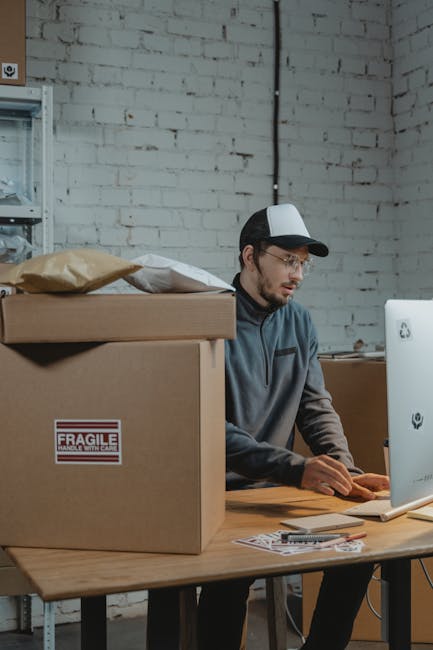
3PL Dropshipping: Strategic Fulfillment Solutions for E-commerce Scalability – In-Depth Guide & Use Cases

Operational Architecture of 3PL Dropshipping
Modern e-commerce expansion requires balancing digital agility with physical logistics infrastructure. 3PL dropshipping solutions create this equilibrium by outsourcing fulfillment operations to specialized partners while maintaining merchant control over critical supply chain nodes. This hybrid model enables brands to leverage third-party expertise in inventory management and logistics without sacrificing strategic decision-making authority.
For example, a mid-sized electronics retailer transitioning to dropshipping faced challenges scaling during peak seasons due to limited warehouse capacity. By integrating with a 3PL provider, they decentralized inventory across multiple fulfillment centers in North America and Europe. This allowed them to reduce average delivery times from 14 days to 5 days while maintaining centralized control through API-linked dashboards that tracked real-time inventory levels and order status. 3PL Dropshipping: The Engine for Scaling to 500+ Orders/Day provides actionable insights into similar scaling strategies.
Core Components of 3PL Integration
Effective 3PL partnerships combine warehousing, logistics technology, and quality management systems. Key capabilities include:
- Automated inventory management with real-time API synchronization: Modern 3PL systems integrate directly with platforms like Shopify, WooCommerce, and Amazon through RESTful APIs. For instance, a fashion brand using Oberlo for product sourcing can sync stock levels across 10 global warehouses, preventing overselling during flash sales by updating inventory counts every 15 minutes.
- Multi-carrier shipping optimization with rate negotiation: Advanced platforms analyze carrier performance metrics like on-time delivery rates and damage claims alongside cost structures. A health supplement seller reduced shipping costs by 22% by utilizing a 3PL’s negotiated rates with DHL for EU shipments while using USPS for domestic orders, dynamically selected based on parcel dimensions and delivery urgency.
- Customizable packaging and kitting operations: 3PLs now offer full brand experience management, including eco-friendly packaging solutions and value-added services like product bundling. A premium skincare brand implemented personalized inserts with QR codes linking to tutorials, resulting in a 15% increase in repeat purchases through enhanced unboxing experiences. 3PL Dropshipping: How to Transform from a ‘Reseller’ into a ‘Brand’ details how such customization builds brand equity.
- Regionalized fulfillment centers for optimized delivery routes: Strategic warehouse placement near major transportation hubs reduces last-mile costs. A furniture retailer established micro-fulfillment centers in Dallas, Chicago, and Atlanta, cutting average shipping distances by 40% and enabling two-day delivery for 85% of U.S. customers without maintaining their own infrastructure.
- Quality assurance protocols across handling stages: Tiered inspection processes include incoming goods verification, random sampling during storage, and final checks before dispatch. A toy manufacturer reduced customer returns by 30% through 100% visual inspections and torque testing on moving parts at the 3PL’s quality control stations.
Comparative Advantages Over Traditional Fulfillment
| Capability | Traditional Dropshipping | 3PL Dropshipping |
|---|---|---|
| Inventory Control | Supplier-dependent | Centralized management |
| Shipping Rates | Fixed supplier contracts | Negotiated carrier networks |
| Quality Checks | Post-purchase verification | Pre-shipment inspection protocols |
| Customization | Limited packaging options | Brand-specific solutions |
| Compliance | Merchant responsibility | Integrated customs documentation |
| Scalability | Constrained by supplier capacity | Dynamic resource allocation |
| Customer Service | Merchant-managed | Co-branded support teams |
| Returns Management | Manual processes | Automated RMA systems |
Consider a case study comparing two similar home goods brands: Brand A using traditional dropshipping and Brand B utilizing 3PL services. During the 2023 holiday season, Brand A experienced 28% stockouts due to supplier capacity limitations, while Brand B maintained 98% order fulfillment rates by dynamically reallocating inventory between fulfillment centers. Additionally, Brand B’s automated returns system processed 65% of returns within 24 hours compared to Brand A’s 5-day average using manual processes. 3PL Dropshipping: Your Insurance Policy Against Supply Chain Disasters explores risk mitigation frameworks for such scenarios.
Implementation Framework for Scalable Operations
Successful 3PL integration requires structured execution across five technical domains:
- Supplier Evaluation: Establish quality benchmarks and production capacity metrics. Develop scorecards assessing factors like on-time delivery rates, defect percentages, and scalability. A case electronics brand implemented a tiered supplier system where top performers received 70% of orders, while secondary suppliers were used for overflow during peak periods.
- Inventory Mapping: Align SKU hierarchies with fulfillment center capabilities. Create ABC classifications based on sales velocity and storage requirements. A pharmaceutical company organized 2,000 SKUs into temperature-controlled (A), standard (B), and hazardous (C) categories, optimizing warehouse slotting and compliance management.
- System Integration: Connect e-commerce platforms with 3PL WMS via API endpoints. Implement middleware solutions like Zapier or MuleSoft for complex integrations. A multi-channel retailer achieved 99.9% data accuracy by using GraphQL APIs to synchronize 15 platforms with their 3PL’s Oracle-based WMS, including real-time updates for 50,000+ SKUs.
- Quality Assurance: Define multi-stage inspection criteria with defect tolerance thresholds. Establish clear defect categorization (critical/major/minor) and resolution protocols. An automotive parts seller reduced warranty claims by 40% through implementing MIL-STD-1916 sampling plans and creating defect image libraries for inspector training.
- Performance Analytics: Implement real-time KPI dashboards for fulfillment accuracy. Track metrics like order cycle time, perfect order rate, and cost per pick. A grocery delivery service improved on-time delivery from 82% to 96% by analyzing last-mile delivery data and adjusting carrier partnerships in underperforming regions.
Technical Challenges and Mitigation Strategies
Addressing common integration complexities requires specialized approaches:
- Data Synchronization: Implement real-time API streaming for inventory accuracy. Use message queues like RabbitMQ for handling API spikes during flash sales. A flash sale platform prevented overselling during a 1M-unit giveaway by implementing Kafka-based event streaming that processed 50,000 inventory updates per second across 8 fulfillment centers.
- Customization Requirements: Develop standardized packaging templates with compliance validation. Create modular design systems that allow merchants to select from pre-approved templates meeting carrier size restrictions and sustainability standards. A luxury goods brand reduced packaging redesign costs by 60% through a template library that automatically validated structural integrity and compliance.
- Quality Consistency: Establish cross-warehouse inspection protocols. Implement centralized quality management systems (QMS) with cloud-based defect tracking. A global apparel brand maintained consistent quality across 12 warehouses by deploying AI-powered visual inspection systems trained on 1 million defect images, achieving 99.5% inspection accuracy.
- Cost Management: Analyze total landed costs beyond base fulfillment fees. Create cost models incorporating storage duration, pick/pack complexity, and carrier zone variations. A cosmetics brand reduced logistics costs by 25% by identifying oversized packaging penalties through landed cost analysis and optimizing product dimensions.
- Capacity Planning: Stress-test infrastructure against peak season volumes. Use historical sales data and Monte Carlo simulations to model capacity requirements. A seasonal décor brand prevented stockouts during Black Friday by simulating 3x normal order volumes and pre-positioning inventory in temporary pop-up warehouses.
Future-Proofing Logistics Infrastructure
Advanced 3PL providers are adopting emerging technologies to enhance fulfillment capabilities:
- Machine learning for demand forecasting and inventory positioning: Predictive models analyze social media trends, search patterns, and competitor pricing to optimize stock distribution. A sports equipment retailer improved inventory turnover by 35% using ML algorithms that predicted regional demand spikes based on weather patterns and local event calendars.
- Blockchain for end-to-end supply chain visibility: Immutable transaction records track products from factory to customer. A food safety startup implemented Hyperledger-based tracking that reduced recall resolution time from 72 hours to 4 hours by providing instant access to batch-specific shipping and storage records.
- Micro-fulfillment centers for urban last-mile delivery: Compact automated warehouses in city centers enable same-day delivery. A grocery chain established 20 micro-fulfillment centers across major metropolitan areas, reducing last-mile delivery costs by 45% and achieving 2-hour delivery windows through autonomous delivery robots.
- AI-powered returns processing systems: Computer vision systems automatically assess returned items for restocking eligibility. An electronics retailer reduced returns processing time by 70% using AI that identified 15 types of product damage and determined appropriate actions (resell, refurbish, recycle).
- Carbon footprint tracking for sustainable shipping options: Real-time CO2 calculators help merchants choose eco-friendly shipping methods. A sustainable fashion brand reduced carbon emissions by 30% by implementing a system that automatically selected ground transportation over air freight for 65% of orders while maintaining promised delivery windows.